
Anycubic Kobra X
4.2Editor score
Native 4-color multicolor printing
600mm/s max printing speed
LeviQ 3.0 auto bed leveling
This guide compares the top 3D printers for fast printing speed, evaluating build volume, motion systems, and multi-color capabilities to help you choose.
Finding a 3D printer that balances speed with quality is essential for modern makers. High-speed models now deliver rapid prototyping without sacrificing detail, making them ideal for both hobbyists and professionals needing quick turnaround times.
We evaluated ten leading 3D printers known for their velocity capabilities. Our comparison focuses on motion systems, acceleration rates, and real-world print times to ensure you get the most efficient machine for your specific workflow needs.
Each pick highlights key strengths and potential trade-offs. We cover everything from budget-friendly options to premium systems with advanced multi-color features. Please note that prices and availability may change, so verify current details before purchasing.
4.2Editor score

4.7Editor score

4.5Editor score
The following table provides a side-by-side comparison of all ten selected 3D printers. Review the specifications to determine which model best aligns with your required build volume and multi-material capabilities.



The Bambu Lab P2S Combo stands out as a top performer for those seeking speed and versatility. It features a high-speed precision design capable of printing up to 600 mm/s while maintaining exceptional accuracy. The inclusion of the AMS 2 Pro enables effortless multi-color printing, making it a complete solution for advanced projects.
We may earn a commission when you buy through this link, at no additional cost to you.
Key strengths include the PMSM Servo Extruder and Active Flowrate Compensation which ensure every layer stays sharp and smooth. The printer can be set up and started within just 15 minutes, thanks to AI failure detection and quick-swap nozzles. Smart Airflow systems adapt to different filaments, keeping overhangs crisp or maintaining a warm chamber for engineering materials.
Trade-offs include the need for the AMS unit to access multi-color features, which is part of the combo but adds to the cost. However, the efficiency gained from reduced setup time and the ability to print complex color designs without purging waste justifies the investment.
This machine is ideal for professionals or serious hobbyists who need reliable, fast, and high-quality prints. If you value a unified workflow from design to finished print without complex manual calibration, the P2S Combo is a strong recommendation.
The combination of 600 mm/s speed and servo motors ensures that rapid printing does not compromise on the quality of corners or layer consistency.
With automatic calibration and AI detection, beginners can start printing complex multi-color parts almost immediately after unboxing.
We may earn a commission when you buy through this link, at no additional cost to you.
The Anycubic Kobra X offers a compelling entry point for users wanting fast, multi-color prints without a premium price tag. It comes born with 4 colors built-in and can be expanded to 19 colors with additional units. The design reduces filament and machine travel path significantly, cutting print times and material costs.
We may earn a commission when you buy through this link, at no additional cost to you.
Its speed is highlighted by a max of 600mm/s, allowing users to complete a Benchy model in roughly 14 minutes. The LeviQ 3.0 auto bed leveling system ensures a flawless first layer every time, while smart AI monitoring detects spaghetti or foreign objects. Connectivity is robust with dual-band Wi-Fi and LAN options.
While it lacks included filament for immediate testing, the savings from reduced purging and travel paths offset this over time. The native 4-color system is innovative for its price bracket, though expanding further requires specific compatible units.
This printer is perfect for home users, schools, and makerspaces looking for a balance of speed, features, and affordability. It simplifies the multi-color workflow significantly compared to traditional single-head printers.
Built-in 4-color printing allows for complex projects out of the box without needing expensive external spool systems.
Reduced travel paths lead to faster prints and less wasted filament compared to standard FDM designs.
We may earn a commission when you buy through this link, at no additional cost to you.
The Snapmaker U1 redefines fast multi-color printing with its unique 4-Toolhead System featuring a 5-second tool changer. This allows for true multi-material printing without purging, reducing waste by up to 5 times. The rigid CoreXY system supports speeds up to 500 mm/s while maintaining stability across the build volume.
We may earn a commission when you buy through this link, at no additional cost to you.
Users can print with rigid and flexible materials in the same job, enabling complex functional parts or colorful shoes with different hardness. Smart calibration ensures accurate offsets and smooth extrusion. The interface is beginner-friendly with a model library and Orca slicing software integration.
The main trade-off is the higher cost compared to single-head printers, but the reduction in waste and time makes it economical for high-volume or prototype shops. The 5-second swap mechanism is validated for over a million swaps without failure.
This is an ideal solution for professionals and workshops needing true multi-material capabilities at high speeds. If you require end-use parts with mixed materials, the U1 offers unmatched workflow efficiency.
Automatic tool changes eliminate purging and manual swaps, saving time and material while improving print consistency.
Combining rigid and flexible filaments in a single print opens new design possibilities for functional prototypes.
We may earn a commission when you buy through this link, at no additional cost to you.
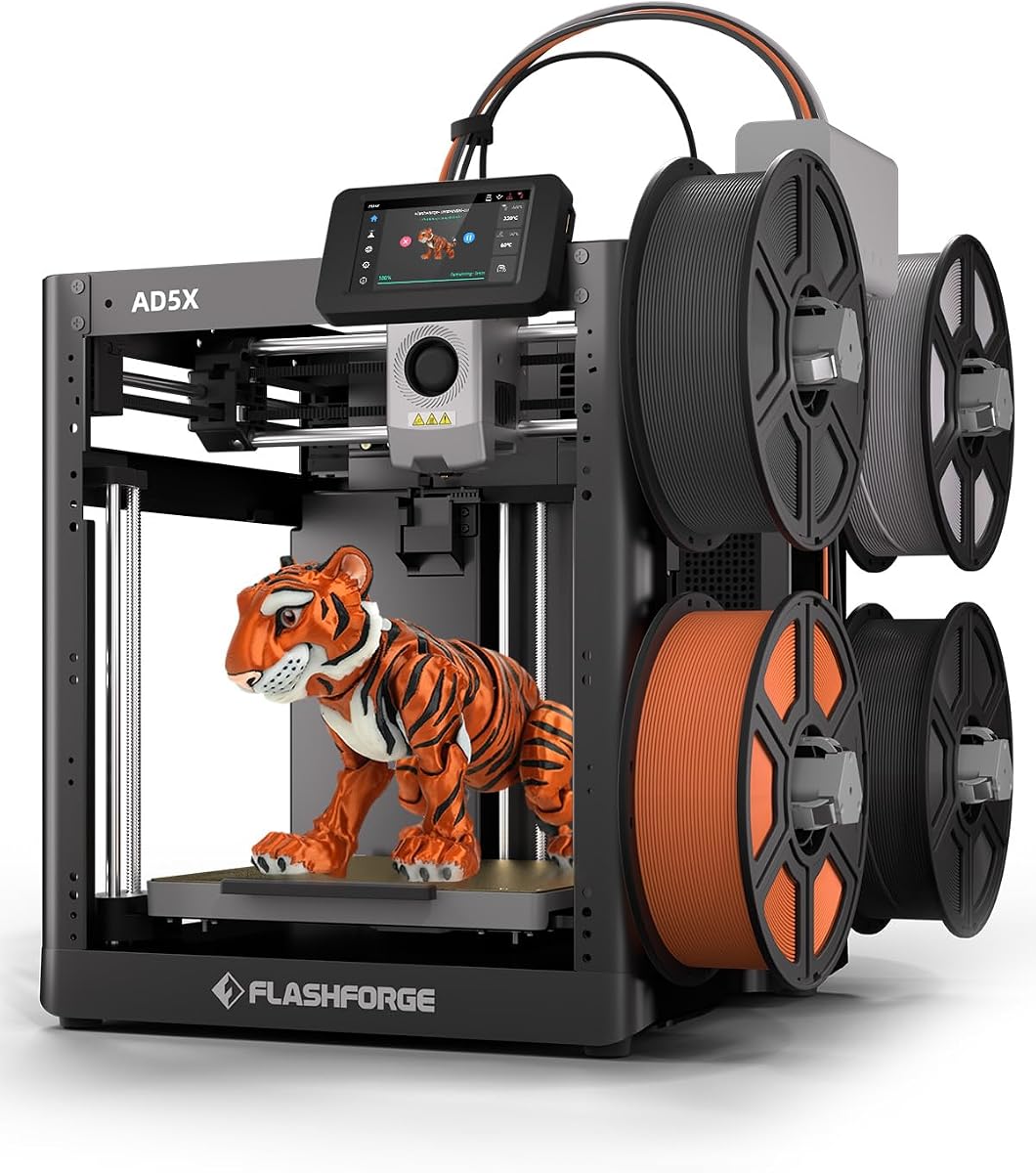
The FLASHFORGE AD5X brings high-speed printing to the mid-range market with a CoreXY structure capable of 600mm/s. It supports up to 4 colors simultaneously and features a 300°C direct drive extruder for versatile filament options. The auto leveling system ensures optimal results every time without manual calibration.
We may earn a commission when you buy through this link, at no additional cost to you.
Its vibration compensation system and dual-channel cooling fan contribute to exceptional print quality despite the high speeds. Users can monitor prints remotely via the Flash Maker mobile app. The printer also includes resume printing and automatic filament feeding to simplify operations.
While it has a smaller build volume than some competitors, the efficiency gain is significant for standard-sized models. The multi-color capability adds creative value, though users should verify current rating feedback before purchase.
This model suits those needing fast, reliable prints with color options without investing in high-end systems. It is a solid productivity booster for general prototyping needs.
The CoreXY design ensures stable, fast movements even at 600mm/s, reducing vibration and improving layer consistency.
App control allows users to track print progress remotely, adding convenience for busy workflows.
We may earn a commission when you buy through this link, at no additional cost to you.
The Bambu Lab P1S combines speed and an enclosed design to handle advanced filaments effectively. It offers 500mm/s printing speed with 20000 mm/s² acceleration, ensuring quick production of masterpieces. The fully enclosed body improves performance for materials like ABS and ASA.
We may earn a commission when you buy through this link, at no additional cost to you.
Users can expand to 16 colors by connecting the Bambu Lab AMS. The printer is ready to use in 15 minutes with automatic bed leveling. It supports a wide range of standard filaments including PLA, PETG, and TPU.
The main limitation is the need for extra accessories for multi-color printing, and it is not recommended for carbon or glass fiber reinforced polymers. However, for standard engineering and artistic prints, it delivers consistent quality.
This printer is suitable for users who want speed without sacrificing the ability to print with engineering-grade materials. Its user-friendly design makes it accessible for all skill levels.
A fully enclosed body maintains stable temperatures for reliable printing of materials prone to warping.
High acceleration rates reduce print times significantly without losing detail on complex geometries.
We may earn a commission when you buy through this link, at no additional cost to you.
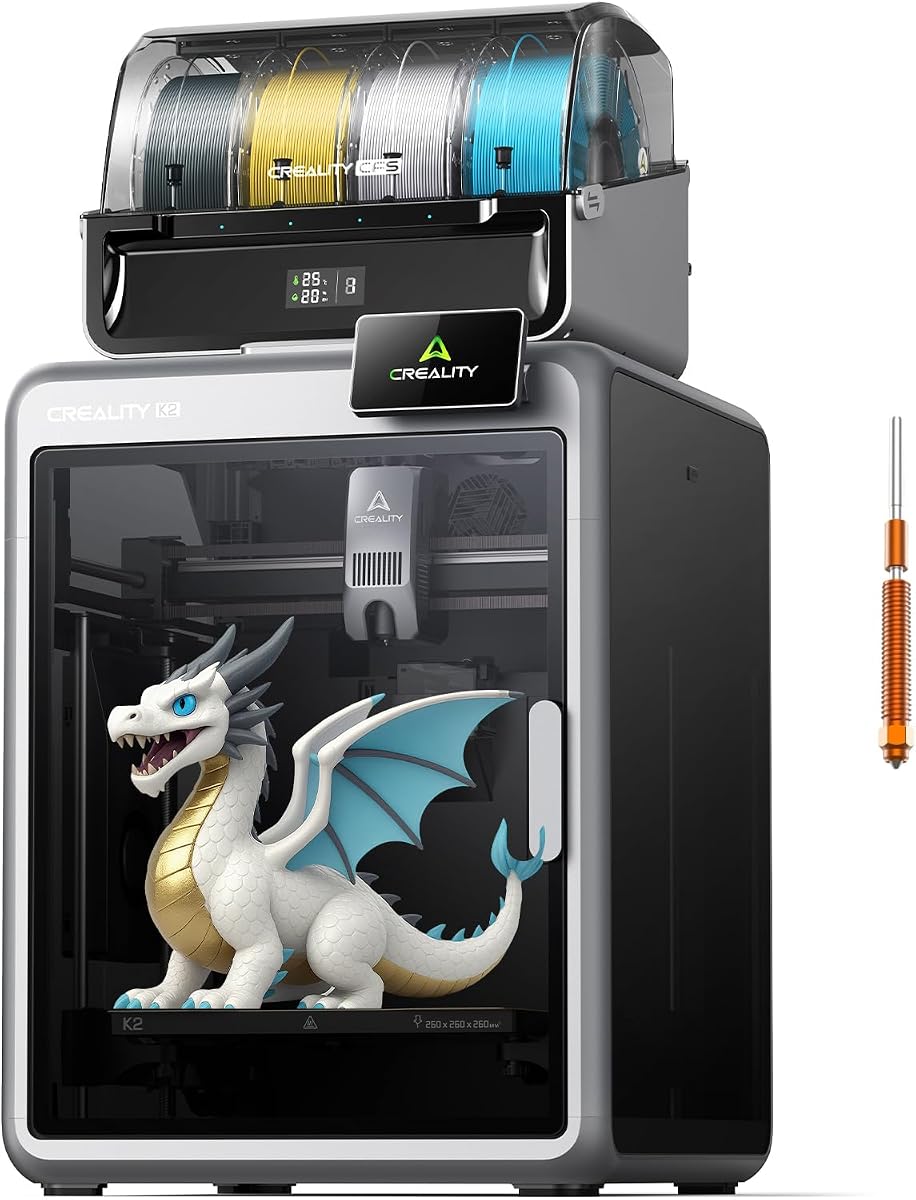
The Creality K2 Combo offers a large build volume of 260 x 260 x 260mm with speeds up to 600mm/s. It supports up to 16 colors using four CFS units. The printer is 95% pre-assembled, allowing for quick plug-and-play usage right after unpacking.
We may earn a commission when you buy through this link, at no additional cost to you.
Features include a silent mode that is quieter than a laptop typing noise, plus a smart AI camera to monitor prints in real-time. The step-servo motor system ensures precise torque adjustment for consistent extrusion and accuracy.
While the multi-color setup can be complex, the expandable system offers great flexibility for artistic projects. The silent mode is a significant benefit for home office environments where noise is a concern.
This model is best for users who need a large build volume with the option for multi-color printing. It combines speed with convenience for those who prefer pre-assembled units.
With a 260mm cube size, you can print larger functional parts or multiple smaller items simultaneously.
Quiet motors and balanced fans allow for printing in shared spaces without noise disruption.
We may earn a commission when you buy through this link, at no additional cost to you.
The Bambu Lab A1 is designed for beginners and kids but delivers professional-grade speed and precision. It features 10,000 mm/s² acceleration for blazing-fast printing. The full-auto calibration handles Z-offset and bed leveling automatically, removing setup hassles.
We may earn a commission when you buy through this link, at no additional cost to you.
Active Flow Rate Compensation ensures smooth prints by adjusting flow rates dynamically. The interface is simplified with a touchscreen, and it includes motor noise canceling for a quiet environment. It can be expanded for multi-color printing with the AMS lite accessory.
Its ease of use makes it perfect for education and hobbyists who want reliable results without technical tweaking. The small footprint and high performance balance well for desktop use.
This printer is ideal for those new to 3D printing who still demand high speed and quality. It bridges the gap between entry-level simplicity and advanced features.
Self-adjusting settings ensure successful first layers every time without user intervention.
Active noise canceling makes it suitable for bedrooms or offices where noise reduction is important.
We may earn a commission when you buy through this link, at no additional cost to you.
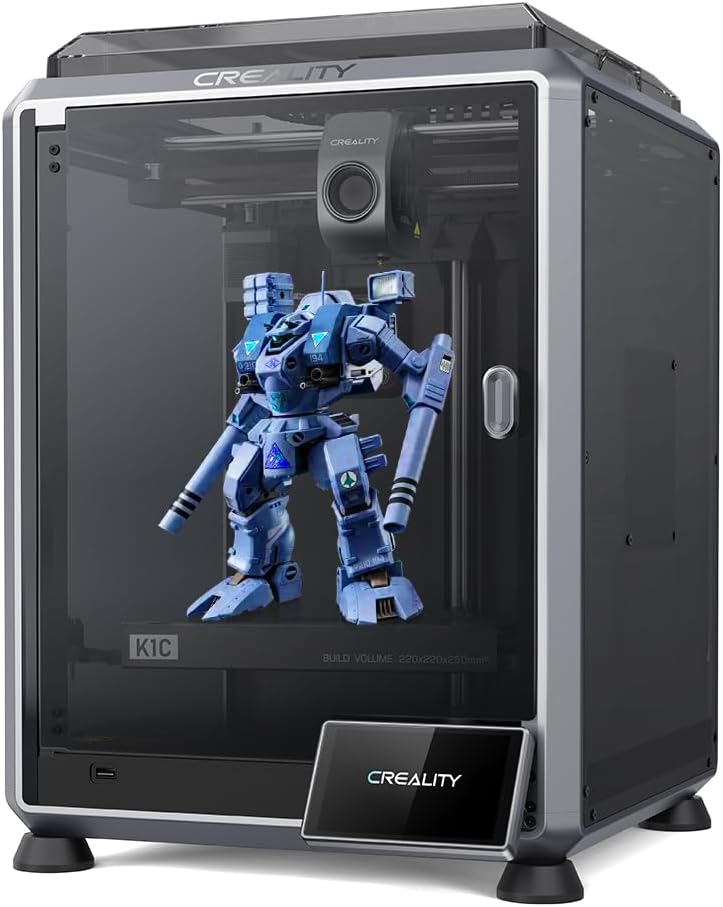
The Creality K1C is built to support tough materials like carbon fiber filament while maintaining 600mm/s printing speed. It comes well assembled and ready to print within minutes. The clog-free direct extruder grips filament tightly and handles 300°C printing temperatures effectively.
We may earn a commission when you buy through this link, at no additional cost to you.
Smart AI functions include an observant camera that recognizes spaghetti failures and debris. Upgraded cooling structures ensure strong layer bonding and minimize stringing. The auto calibration processes save time on leveling and offsets.
Users looking for durable parts made from reinforced filaments will appreciate its specialized design. While the build size is smaller, the material versatility adds significant value for functional prototyping.
This machine is best for makers who need to print with engineering-grade composites without sacrificing speed. It simplifies the workflow for challenging materials.
Specifically reinforced to handle abrasive filaments that would damage standard nozzles.
Camera detection helps prevent failed prints, saving time and material on long jobs.
We may earn a commission when you buy through this link, at no additional cost to you.
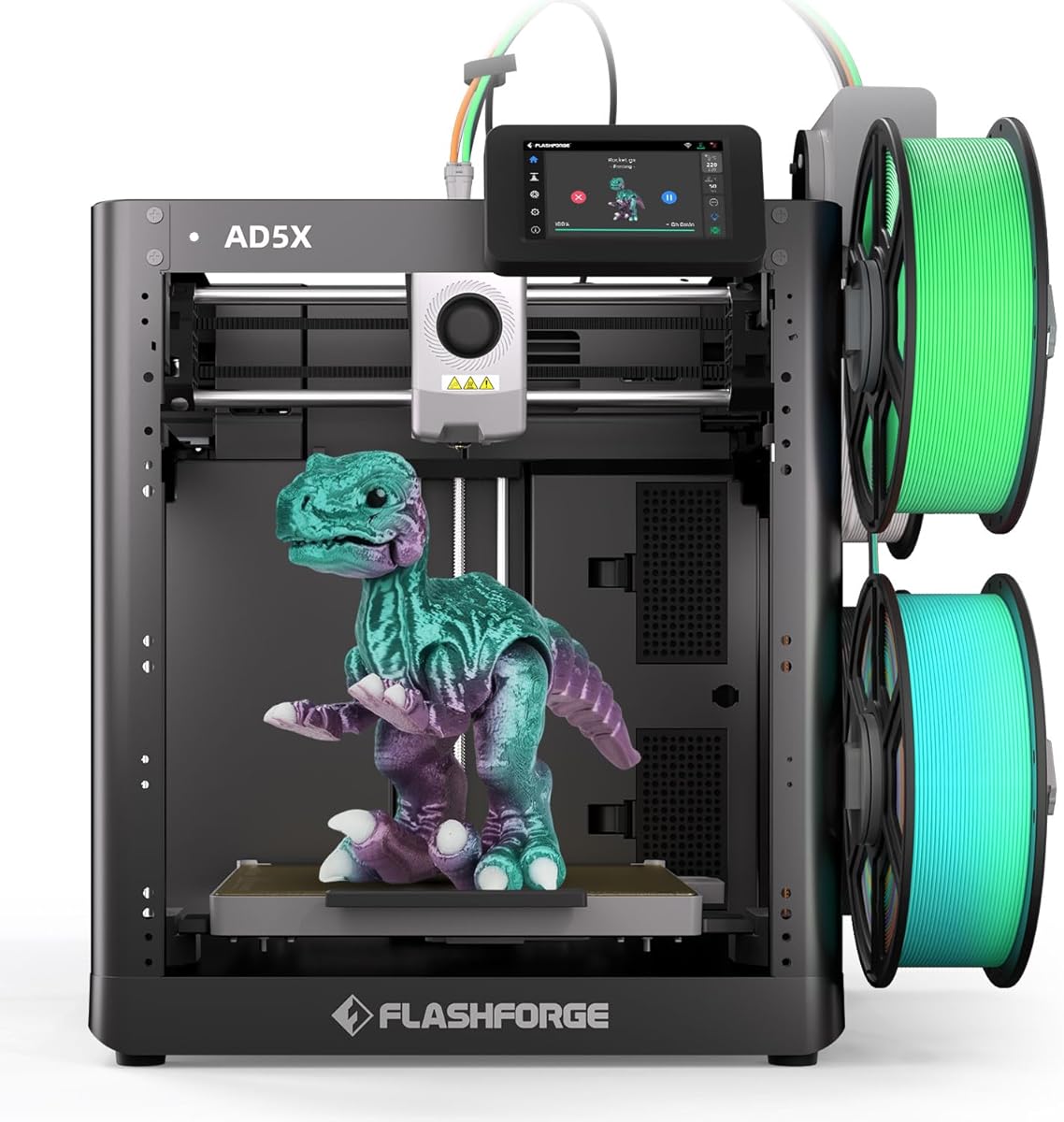
The FLASHFORGE AD5X focuses on compact design while delivering 600mm/s CoreXY speed. It features an Intelligent Filament System (IFS) for multi-material and multi-color printing. The system allows four spools to be arranged side by side, saving space on your desk.
We may earn a commission when you buy through this link, at no additional cost to you.
Full-auto calibration ensures consistent printing, and the printer supports various materials including PLA, TPU, and PETG-CF. Vibration compensation algorithms minimize errors caused by mechanical shifts. It includes filament backup to prevent interruptions.
Its compact form factor makes it ideal for small studios or limited desk spaces. Despite the size, it retains the speed and multi-color features of larger machines.
This printer is great for users with space constraints who still require fast, multi-color production. It offers a flexible and efficient workflow in a small footprint.
Modular design saves desktop space while maintaining full printing capabilities.
Intelligent Filament System allows for seamless color and material changes without complex external units.
We may earn a commission when you buy through this link, at no additional cost to you.
The Creality K2 Combo features an expandable color system that can reach up to 16 vibrant colors using multiple CFS units. It reaches speeds up to 600 mm/s and includes a built-in air purifier for a safer printing environment. The printer is fully pre-assembled for ready use.
We may earn a commission when you buy through this link, at no additional cost to you.
Its direct drive extrusion can handle engineering-grade filaments up to 300°C. Wi-Fi connectivity and local storage allow for fast and smart printing management. The AI chamber camera provides failure detection and build plate monitoring.
Flexibility in color and material choices is the standout feature here. The air purifier adds safety, which is beneficial for indoor use where ventilation is limited.
This model suits those who value expandability and safety features alongside speed. It is a robust choice for varied and large-scale printing tasks.
Built-in purifiers filter VOCs, making the machine safer for indoor home environments.
Adding up to four CFS units allows for extensive color variety without replacing the base printer.
We may earn a commission when you buy through this link, at no additional cost to you.
Selecting the right fast 3D printer involves considering motion systems, build volume, and multi-color capabilities.
CoreXY motion systems are standard in high-speed printers. They separate the movement of the axes to reduce vibration and allow faster acceleration without compromising accuracy.
Look for CoreXY or similar rigid frame designs if speed is a priority. Traditional Cartesian printers often struggle to maintain quality at high speeds.
Acceleration determines how quickly the print head can change direction. Higher acceleration values like 20,000 mm/s² allow for faster overall printing times, especially on detailed objects.
Aim for printers with high acceleration to reduce wait times for complex projects without sacrificing surface finish.
Multi-color printing requires systems like AMS or tool changers. These systems automate filament switching, saving time compared to manual swaps or purging.
If you need multi-color output, ensure the machine supports a reliable system that minimizes waste and downtime.
Build volume dictates the size of objects you can print. High-speed printers come in various sizes, so consider whether you need to print large functional parts or smaller prototypes.
Choose a build volume that matches your common project requirements to maximize efficiency and utility.
Fast printers may have limitations on certain materials. Ensure the hotend can reach the required temperatures for engineering filaments like ABS or ASA.
Check if the printer supports carbon fiber or other abrasive filaments if you plan to use them.
Features like AI monitoring, auto leveling, and remote control streamline the workflow. They reduce the chance of human error and failed prints.
Prioritize models with automation tools to keep your production running smoothly without constant supervision.
High-speed motors can be loud. If you work in a shared space, look for models with silent mode or noise-canceling technologies.
Quiet operation ensures you can print in offices or homes without disturbing others.
Quick setup saves time before printing starts. Auto-calibration features ensure the bed is level and ready instantly.
Choose a machine that minimizes manual calibration steps to get straight to printing faster.
Start by calibrating the print bed using the auto-leveling feature to ensure proper adhesion and first-layer quality.
Keep filament dry and stored in airtight containers to prevent moisture-related print failures, especially at high speeds.
Perform regular maintenance on nozzles and belts to maintain accuracy and extend the lifespan of the machine.
Not necessarily if the printer is designed for speed. Modern high-speed models use vibration compensation and servo motors to maintain precision even at 600mm/s.
Many of the top models on this list can print up to 600mm/s. However, practical speeds depend on layer height and filament type.
Yes, most feature auto-leveling and intuitive interfaces. They remove complex manual steps to make fast printing accessible.
Standard filaments like PLA work fine. For very high speeds, ensure your nozzle size matches the flow rate for best results.
Yes, models like the P2S Combo and Kobra X support multi-color printing. Check if the combo or additional accessories are needed.
Build volumes vary from 220mm to 260mm. Most are compact enough for a standard desktop but may require ventilation.
Maintenance is similar to standard printers. However, higher speeds may require more frequent cleaning of nozzles and belts.
Many include AI cameras and air filters. Check for thermal protection and enclosure features if printing with sensitive materials.
The Bambu Lab P2S Combo leads with its combination of speed and ease of use. The Anycubic Kobra X offers the best budget option with native multi-color features.
Prioritize features like CoreXY motion and high acceleration if speed is your main goal. Ensure the build volume fits your typical project sizes.
Always check current prices and availability before purchasing. Technology evolves quickly, so verify the latest specs on the product pages.