
Humminbird PiranhaMAX 4
4.6Editor score
Dual Beam Sonar Technology
Tilt and Swivel Mount
Compact and Easy to Use
Finding the right fish finder for a small boat requires balancing performance with size and budget. Modern units offer advanced sonar technology to help you locate fish quickly without cluttering your deck.
We compared ten highly rated models based on display quality, sonar clarity, GPS features, and ease of installation. Each selection offers unique strengths for kayaks, pontoon boats, and small runabouts.
Each pick highlights key capabilities and real-world performance insights to help you decide quickly. Please note that pricing and availability change frequently so check current listings before purchasing.
4.6Editor score

4.7Editor score

4.5Editor score
As an Amazon Associate we earn from qualifying purchases.
This side-by-side comparison highlights the key specifications and capabilities of each unit to help you find the perfect match for your small boat needs.
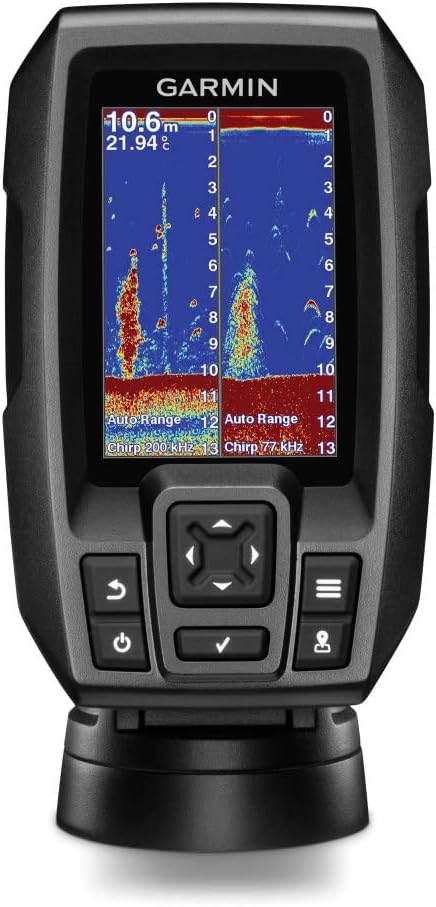

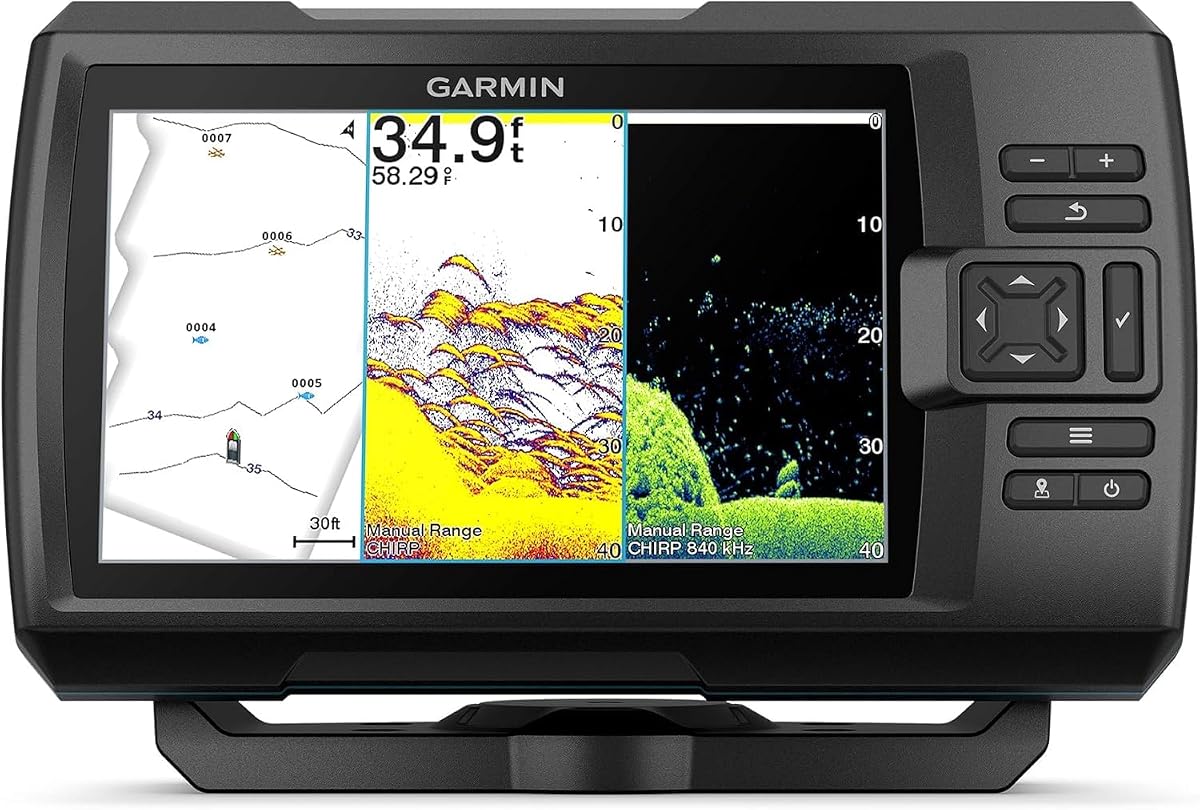


The Garmin Striker 4 stands out as a top contender for small boat anglers seeking reliable performance without excessive cost. With a 4.6 star rating it delivers clear sonar images and essential GPS functionality in a compact form factor.
We may earn a commission when you buy through this link, at no additional cost to you.
Its standout feature is the ClearVu scanning sonar which provides near photographic images of underwater objects and fish. The Chirp sonar technology enhances target separation making it easier to distinguish fish from debris in varied conditions.
While the screen is only 3.5 inches it remains readable in sunlight due to high contrast. The interface uses dedicated buttons which simplifies operation even when wearing gloves or dealing with rough water.
This unit is ideal for anglers who need a straightforward tool for locating structure and fish without complex setup. Its durability and ease of installation make it a practical choice for kayaks and small runabouts.
The Chirp sonar sends a continuous sweep of frequencies to create crisper fish arches and better target separation than traditional sonar systems.
Built-in GPS allows you to mark waypoints and navigate to specific locations like brush piles or docks with ease.
We may earn a commission when you buy through this link, at no additional cost to you.
The Humminbird PiranhaMAX 4 is a fantastic entry-level option for those who want to identify fish without breaking the bank. It maintains a strong 4.6 star rating by offering essential features that work well for casual anglers.
We may earn a commission when you buy through this link, at no additional cost to you.
Its dual beam sonar lets you choose between a narrow beam for detail or a wide beam for coverage. This flexibility helps you adapt to different water depths and structures quickly during your outing.
The tilt and swivel mount allows you to adjust your viewing angle easily which is helpful in tight cockpit spaces. However the lack of GPS means you will need a separate device for navigation.
If your primary goal is simply seeing what is below your boat this model delivers consistent results. It is a great starter unit for small boats where space and budget are limited.
You can switch between narrow and wide beams to balance detail and coverage based on your immediate fishing needs.
Everything you need is included in the box making installation fast and straightforward for first-time users.
We may earn a commission when you buy through this link, at no additional cost to you.
The Humminbird Helix 5 offers a significant step up in features for anglers who want serious mapping capabilities. With a 4.4 star rating it balances high-end sonar with extensive chartplotting features in a mid-size package.
We may earn a commission when you buy through this link, at no additional cost to you.
Its Dual Spectrum ChirP Sonar provides precise target separation allowing you to see fish arches and structure clearly. The built-in Basemap covers over 10000 lakes and U.S. coastlines providing immediate navigation value.
One unique feature is AutoChart Live which creates maps of depth contours and vegetation while you boat. This real-time mapping helps you discover new spots without relying on pre-loaded maps alone.
This unit suits anglers who spend long days on the water and need to mark productive areas accurately. While it costs more the mapping tools justify the investment for serious fishermen.
AutoChart Live allows you to create custom maps of your local waters as you fish enhancing your knowledge of the lake bottom.
You can switch between Wide Mode for coverage and Narrow Mode for detail to suit different fishing scenarios.
We may earn a commission when you buy through this link, at no additional cost to you.
The Garmin STRIKER Vivid 4cv delivers impressive color clarity for a unit in this price range. It holds a 4.7 star rating making it one of the highest rated options for small boat owners who want visual detail.
We may earn a commission when you buy through this link, at no additional cost to you.
The Vivid Scanning Sonar color palettes make it easy to distinguish fish from structure at a glance. This visual aid reduces eye strain and helps you make quick decisions while casting or trolling.
Along with the sonar you get built-in Quickdraw Contours mapping which allows you to create and store detailed maps. The high-sensitivity GPS marks waypoints and tracks speed accurately during your trip.
This model is perfect for those who prioritize visual feedback over complex chartplotting. It offers a great balance of price performance and ease of use for weekend warriors.
New color palettes highlight key details on the display making it easier to spot targets in noisy water conditions.
Quickdraw Contours mapping software lets you create custom lake maps without needing an external chart.
We may earn a commission when you buy through this link, at no additional cost to you.
The Garmin STRIKER Vivid 7cv brings premium features to small boats with its expansive seven-inch color screen. Rated 4.5 stars it provides a viewing experience that rivals much larger units on the market.
We may earn a commission when you buy through this link, at no additional cost to you.
With Wi-Fi connectivity you can link the unit to your smartphone to transfer waypoints and access the Quickdraw Community. This integration keeps your data up to date and helps you find community-created maps.
The Vivid scanning sonar delivers crisp images of fish and structure which are easier to interpret on a larger display. You also benefit from high-sensitivity GPS to mark spots and track speed.
If you have the space on your console this unit offers significant visual advantages. It is ideal for anglers who want a larger screen for shared viewing during boat trips.
Wi-Fi allows you to connect to the ActiveCaptain app for seamless data transfer and software updates.
Access the Garmin Quickdraw Community to share and download user-generated maps for better navigation.
We may earn a commission when you buy through this link, at no additional cost to you.
The Lowrance Eagle is designed with an IPS portrait screen that remains clear even in bright sunlight. It has earned a 4.3 star rating for its reliability and straightforward operation in small boat environments.
We may earn a commission when you buy through this link, at no additional cost to you.
Auto-Tuning Sonar automatically adjusts settings so you do not have to fiddle with menus while fishing. This feature ensures you always get optimized performance without manual tweaking of depth or sensitivity.
The included 200 kHz Bullet Skimmer transducer delivers a broad 44-degree beam which is ideal for kayaks and small boats. You can view fish icons with depth information to identify targets quickly.
This model is excellent for anglers who want a no-fuss device that works right out of the box. The twist-lock connector makes installation and removal simple for versatile mounting options.
The IPS display stays clear from wide viewing angles and through polarized sunglasses for better visibility.
Auto-Tuning Sonar optimizes settings automatically allowing you to focus entirely on finding fish.
We may earn a commission when you buy through this link, at no additional cost to you.
The LUCKY Portable Fish Finder offers unmatched flexibility for small boats and kayaks with its wireless design. Rated 4.5 stars it allows you to cast the sensor into water without drilling holes or running cables.
We may earn a commission when you buy through this link, at no additional cost to you.
You can operate the device from up to 853 feet away giving you freedom to move around the boat freely. The 3.5 inch LCD displays fish icons with exact depth numbers for clear real-time feedback.
Its portable design makes it lighter than a 1-liter water bottle and easy to pack for travel. The sensor is floating so you can use it for ice fishing or shore casting without worry of dropping it.
This unit is perfect for anglers who fish from multiple locations or need a backup device. It removes the complexity of wiring while still providing accurate depth and fish location data.
No wires or limits mean you can cast the sensor exactly where you want to fish without restriction.
The screen scrolls right to left showing a continuous history of what passed under the sensor.
We may earn a commission when you buy through this link, at no additional cost to you.
The Garmin Striker Plus 4 is built to withstand harsh fishing environments with a rugged design and bright display. It holds a 4.6 star rating for its durability and clear imaging in various weather conditions.
We may earn a commission when you buy through this link, at no additional cost to you.
Its sunlight-readable 4.3 inch display ensures you can see sonar data even on the brightest days. The intuitive interface makes it easy to access settings and views without getting lost in menus.
Built-in Quickdraw Contours mapping software lets you create and store maps with 1-foot contours. This feature is helpful for marking productive spots and navigating shallow areas safely.
This model is ideal for anglers who prioritize durability and visibility over large screen size. It delivers reliable performance for day-to-day fishing trips with minimal fuss.
The sunlight-readable screen ensures clear visibility even in direct sunlight without glare issues.
Designed for every fishing environment this unit stands up to saltwater and rough conditions.
We may earn a commission when you buy through this link, at no additional cost to you.
The Humminbird PiranhaMAX DI offers a powerful upgrade to the classic PiranhaMAX with included Down Imaging technology. Rated 4.6 stars it provides detailed views of underwater structures like rocks and bridge pilings.
We may earn a commission when you buy through this link, at no additional cost to you.
Down Imaging gives you a clear view of what is below your boat which helps identify precise fish holding areas. The 4.3-inch color display enhances this detail making it easier to interpret what you see.
You also get Dual Beam Sonar options for choosing between narrow and wide beams based on your needs. Fish alarms and zoom features add convenience for tracking active schools or specific depths.
This unit is a great choice for those who want imaging capabilities without a full chartplotter system. It adds a new dimension to structure fishing at a reasonable price point.
Down Imaging provides sharp detail of timber brush and rocks below your boat for precise targeting.
The color LCD makes it easier to distinguish different objects and fish icons on the screen.
We may earn a commission when you buy through this link, at no additional cost to you.
The Garmin STRIKER 5CV combines traditional and scanning sonar in a balanced package suitable for many small boats. It has a 4.5 star rating reflecting its consistent performance and user-friendly design.
We may earn a commission when you buy through this link, at no additional cost to you.
It includes both CHIRP Traditional Sonar for fish arches and ClearVu Scanning Sonar for detailed structure views. This dual approach helps you cover all bases whether you are targeting schools or specific structures.
The five-inch GPS display allows you to mark waypoints and view speed clearly while on the move. Quickdraw Contours mapping software is built-in so you can create custom lake maps without extra fees.
This model is a reliable all-rounder for anglers who want solid imaging without paying for premium connectivity features. It provides a great foundation for upgrading your boat's electronics efficiently.
CHIRP Traditional and ClearVu Scanning sonar provide complementary views for a complete underwater picture.
Built-in GPS functionality helps you mark waypoints and track routes directly on the unit.
We may earn a commission when you buy through this link, at no additional cost to you.
Selecting the right fish finder involves weighing several technical factors to ensure the unit meets your specific needs.
The size of the display impacts how much detail you can see without squinting. For small boats a screen between 3.5 and 5 inches is often ideal as it provides enough detail without crowding your dashboard.
Look for sunlight-readable panels and high contrast ratios to ensure visibility during bright daytime fishing.
Modern units offer various sonar technologies including traditional 2D CHIRP and scanning sonars like ClearVu or Down Imaging. Each has strengths depending on whether you want broad coverage or detailed structure views.
Traditional CHIRP is excellent for fish arches while scanning sonars excel at showing bottom structure clearly.
Built-in GPS allows you to mark waypoints and create routes which is vital for navigating large lakes safely. Advanced units include mapping software that helps you chart contours and mark productive spots.
If you frequently fish unfamiliar waters prioritize models with robust GPS and map storage capabilities.
On small boats every inch of space matters so choose a unit that fits your console or mount type. Consider tilt swivel mounts or portable wireless options if you need to move the unit between boats.
Ensure the mounting solution is secure to prevent damage during rough water conditions or transport.
The transducer sends and receives sonar signals so its quality determines the clarity of your underwater view. Check that the included transducer matches your boat type and water conditions for best results.
Some models offer interchangeable transducers allowing you to upgrade imaging capabilities later.
Small boats often have limited electrical capacity so check the current draw of the unit you are considering. Lower power consumption means longer battery life which is crucial for day trips without charging access.
Ensure your boat's battery system can handle the unit's load without draining power from other systems.
An intuitive interface with dedicated buttons or simple menus helps you stay focused on fishing rather than fiddling with screens. Touchscreens are common but physical buttons can be easier to use when wearing gloves.
Prioritize units that offer quick access to essential functions like zoom and sensitivity adjustments.
Fishing gear must withstand exposure to water splashes and weather elements so look for units with high IP ratings. A rating like IPX7 ensures the device can survive temporary immersion if it falls overboard.
Choose rugged models designed for marine environments to ensure longevity and reliable performance.
Install the transducer on a flat section of your hull away from turbulence or propeller wash to ensure clear sonar readings. Secure the display unit in a visible location where you can reach the controls easily.
Calibrate the unit according to the manufacturer instructions to ensure depth and speed readings are accurate. Adjust sensitivity settings based on water conditions to reduce noise and improve target separation.
Rinse the unit with fresh water after every use especially if used in saltwater to prevent corrosion. Store it in a dry place during the off-season to protect sensitive electronics from damage.
While not strictly necessary GPS fish finders allow you to mark waypoints and navigate back to productive spots. This feature is particularly useful on large lakes where landmarks are scarce. If you only fish small familiar ponds a basic sonar may suffice.
Displays between 3.5 and 5 inches offer a good balance of readability and space efficiency. Smaller units save space but may make viewing details harder in bright light. Choose based on your console size and viewing preferences.
Yes most fish finders are rated for saltwater use but you must rinse them with fresh water after each trip. Salt corrosion can damage electronics if not cleaned properly. Check the water resistance rating before purchasing for saltwater environments.
CHIRP sonar sends a continuous sweep of frequencies to create crisper fish arches and better target separation. It helps distinguish individual fish from underwater structures more effectively than traditional sonar. This technology significantly enhances your ability to identify targets.
Portable units are ideal if you fish from multiple boats or kayaks since they require no drilling. Mounted units generally offer more stability and power options for larger setups. Your choice depends on how often you move between fishing locations.
Battery life varies by unit but many can last 10 to 20 hours on a single charge with typical use. Using power-saving modes like sleep settings can extend this duration significantly. Always bring spare batteries for long trips to avoid running out.
2D sonar provides a cross-sectional view of what is below the boat while scanning sonar creates side or down views. Scanning sonars offer more detailed imagery of structure which helps locate fish holding spots. Both types are useful depending on your fishing style.
Yes but dense weeds can interfere with sonar signals causing false readings or noise. Adjusting sensitivity and using specific weed modes can help clarify the bottom. Some advanced units use dual-frequency systems to filter out debris more effectively.
We reviewed ten top-rated units ranging from budget-friendly options to advanced GPS-enabled models. The Garmin STRIKER Vivid 4cv leads as our top pick for its balance of color display and scanning technology.
Focus on selecting a unit that matches your primary fishing style whether it is structure fishing or open water casting. Prioritize ease of use and display clarity to ensure you can interpret data quickly while on the water.
Remember that prices change frequently so always check current listings before making a purchase. Investing in the right tool will enhance your experience and help you find more fish this season.