
Phrozen Sonic Mini 8K S
4.4Editor score
22 micron XY resolution
7.1 inch LCD screen
Compact tabletop design
Creating miniature figures for tabletop games requires precision and detail. A quality printer ensures your models have sharp features and consistent layering for painting. Finding the right machine means balancing speed with resolution to meet your specific gaming needs.
We evaluated ten top models focusing on build volume, print speed, and material compatibility. Our analysis highlights which machines excel at small details versus large batches. Each selection supports different workflows from resin curing to filament extrusion.
Each pick shows key strengths and potential trade-offs for your setup. Prices and availability can change rapidly in the electronics market. Always verify current deals before purchasing to ensure you get the best value for your investment in crafting tools.
4.4Editor score

4.7Editor score

4.5Editor score
As an Amazon Associate we earn from qualifying purchases.
The following table offers a side-by-side comparison of all ten selected models. It highlights key specifications like speed, resolution, and material support to help you decide quickly based on your priority features.






The Bambu Lab A1 stands out as a top contender for new users needing precision. It holds a strong 4.7 rating from satisfied owners. The standout quality is its combination of speed and automated setup features.
We may earn a commission when you buy through this link, at no additional cost to you.
High-speed precision is delivered through impressive acceleration up to 10,000 mm/s². Active flow rate compensation ensures smooth prints every time. Multi-color printing with AMS lite brings vibrant designs to life easily.
While the AMS lite is sold separately for color printing, this keeps the base unit affordable. The smaller build volume suits miniatures well without taking up too much desk space.
Beginners and hobbyists looking for reliability will love this model. It removes manual calibration hassles so you can focus on creating. Buy this if you want a hassle-free entry into 3D printing.
The printer handles Z-offset and bed leveling automatically for consistent results.
Active motor noise canceling allows quiet printing in home offices.
We may earn a commission when you buy through this link, at no additional cost to you.
The P2S is a powerhouse for serious creators wanting high-end features. It combines FDM speed with sophisticated airflow and multi-color systems. Users praise its readiness to print in just 15 minutes.
We may earn a commission when you buy through this link, at no additional cost to you.
High-speed precision is maintained even at 600 mm/s. The AMS 2 Pro dries filament and manages colors seamlessly. Adaptive airflow keeps overhangs crisp or heats the chamber for tough materials.
The cost is higher than basic models but pays off in reliability. AI failure detection saves prints from ruin. However, standalone use limits color options without the combo.
This is the choice for pros needing versatility and speed. It handles engineering filaments well for durable miniatures. Buy this if you demand top performance and multi-material capability.
The AMS 2 Pro keeps spools dry for flawless printing every time.
Adaptive airflow balances cooling and heat retention automatically.
We may earn a commission when you buy through this link, at no additional cost to you.
Resin printing offers unmatched detail for miniatures compared to filament. The Phrozen Sonic Mini 8K S delivers this with 22 micron resolution. It is designed to be accessible for those new to resin.
We may earn a commission when you buy through this link, at no additional cost to you.
Art with precision is achieved through the 8K mono LCD. This brings every nuance to life. The compact size fits any desk and the load capacity supports stable prints.
While resin requires cleanup and safety gear, the results are superior. Open source software compatibility gives freedom to use favorites like Lychee. The smaller build limits large prints but suits figurines.
Ideal for hobbyists wanting sharp features without spending much. The value for money is attractive for beginners. Buy this if detail is your priority and you handle resin safely.
Fine XY resolution ensures crisp lines and smooth surfaces on models.
Supports slicers like Lychee and Chitubox without restrictions.
We may earn a commission when you buy through this link, at no additional cost to you.
The P1S brings enclosed safety to high-speed FDM printing. This design helps with engineering filaments that need heat retention. It sets up quickly and offers auto leveling for success.
We may earn a commission when you buy through this link, at no additional cost to you.
Up to 16 colors are possible with AMS connection. The 500mm/s speed reduces wait times significantly. Supported filaments include PLA, PETG, and ABS for versatility.
While not all accessories are included, the build quality is solid. The enclosed body reduces noise and warping. It is slightly pricier but worth the performance gains.
Perfect for makers who need speed and safety. Use it for miniatures requiring durability. Buy this if you plan to print engineering materials regularly.
Fully enclosed body improves performance for advanced filaments.
Connect Bambu Lab AMS for vibrant multi-material prints.
We may earn a commission when you buy through this link, at no additional cost to you.
The Kobra X introduces native 4-color printing out of the box. It simplifies multi-color workflows without complex setups. Features like hardened nozzles and AI monitoring add reliability.
We may earn a commission when you buy through this link, at no additional cost to you.
LeviQ 3.0 uses a 49-point calibration for flatness. Hardened precision ensures layers stay smooth. Smart AI detects issues and alerts you remotely via app.
Filament is not included so budget for spools separately. The large print size supports various projects. It is new but shows promise with solid tech.
Great for those wanting multi-color without extra mods. Use it for complex miniatures. Buy this if you value native color support and large build.
Born with 4 colors built-in to avoid purging waste.
Advanced leveling algorithm ensures 100% bed flatness.
We may earn a commission when you buy through this link, at no additional cost to you.
This model balances speed with ease of maintenance. The 3-second nozzle swap allows quick changes for different layers. Vibration compensation algorithms eliminate ghosting for clean lines.
We may earn a commission when you buy through this link, at no additional cost to you.
A dual filtration system keeps the environment clean and safe. The enclosure operates under 50dB making it quiet. High-temp extruder supports ABS and PETG well.
The price sits between basic and premium options. It requires initial setup but pays off in workflow speed. Filament detection prevents run-offs during long prints.
Ideal for offices or home studios. Use it for multi-layer miniatures. Buy this if you value quiet operation and tool-free maintenance.
Tool-free mechanism allows effortless nozzle replacements across sizes.
Algorithms eliminate ghosting for smooth high-precision surfaces.
We may earn a commission when you buy through this link, at no additional cost to you.
Snapmaker U1 offers a unique approach to multi-color printing. Four independent toolheads switch in just five seconds. This reduces waste compared to purging single nozzles.
We may earn a commission when you buy through this link, at no additional cost to you.
True multi-material printing allows mixing rigid and flexible parts. The CoreXY structure enables 500 mm/s speeds. Smart calibration ensures dimensions are accurate with minimal adjustment.
The price is high but justifies the advanced features. It saves time on complex parts. Software supports beginners well with model libraries.
Best for advanced users needing flexible prints. Use it for articulated miniatures. Buy this if you want to mix materials freely.
Automatic tool changer reduces tool change time to just 5 seconds.
Swaps toolheads instead of purging to reduce waste by 5x.
We may earn a commission when you buy through this link, at no additional cost to you.
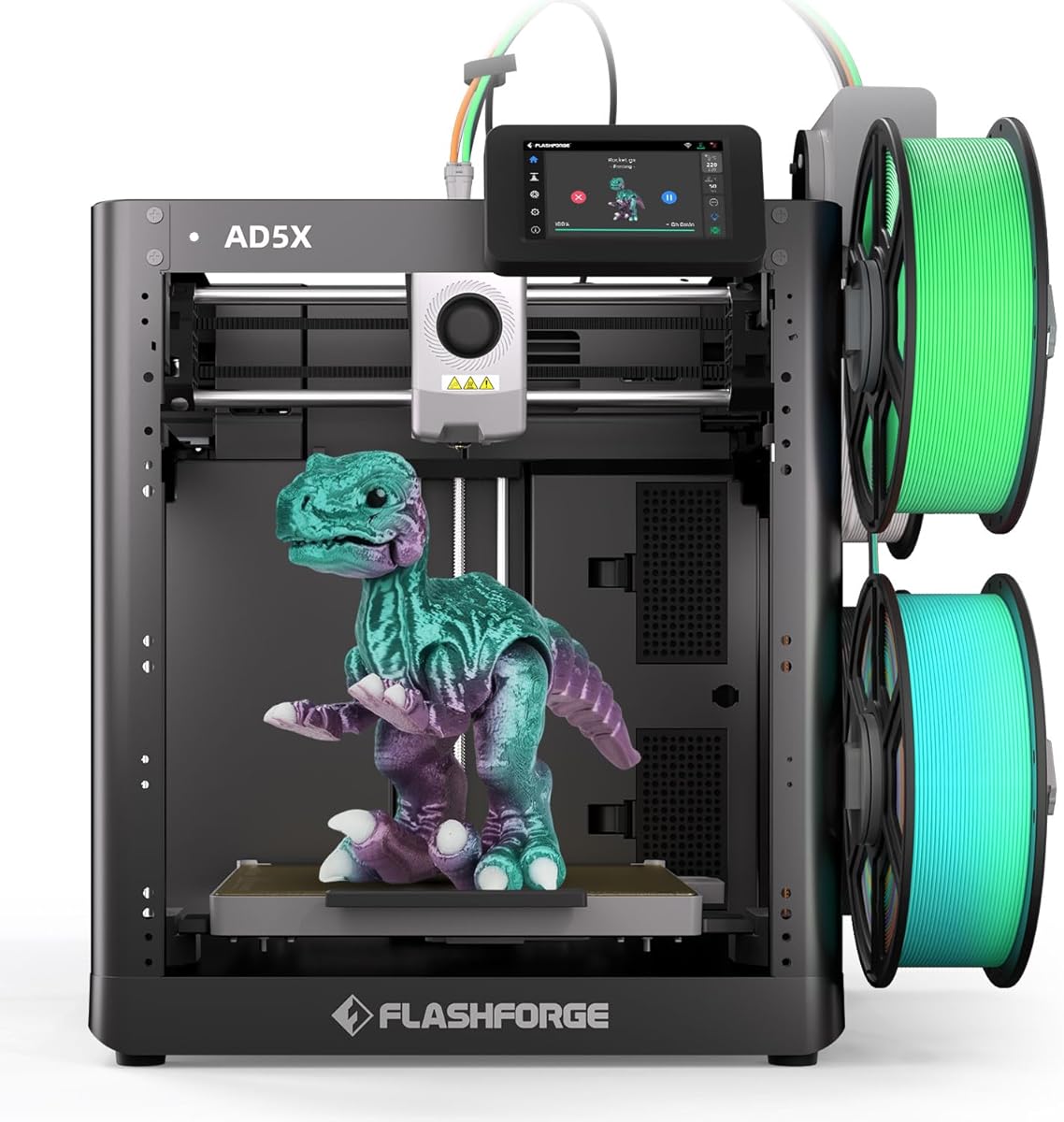
The AD5X brings vibrant multi-color printing with intelligent management. The IFS automatically detects and refills filament to minimize downtime. High acceleration allows rapid turnaround for projects.
We may earn a commission when you buy through this link, at no additional cost to you.
Vibration suppression ensures layers align precisely. The all-metal CoreXY structure offers stability. Flexible TPU printing expands versatility for creative models.
While the rating is moderate, the features are strong. Large printing size handles diverse tasks. Setup requires attention but works smoothly later.
Good for artists needing speed and color. Use it for visual displays. Buy this if you want large volume with multi-color.
Automatically detects and refills filament for seamless printing.
Robust design minimizes vibrations for smoother accurate prints.
We may earn a commission when you buy through this link, at no additional cost to you.
The A1 Mini is perfect for tight spaces. It retains the speed and auto features of larger models. The combo includes AMS lite for multi-color right away.
We may earn a commission when you buy through this link, at no additional cost to you.
Pre-assembled design reduces setup time to 20 minutes. Active flow compensation ensures accuracy on small parts. Noise levels stay low for home use.
Build volume is limited to small miniatures. This makes it ideal for tabletop users. It is quieter than many competitors.
Best for desk setups needing color. Use it for individual figurines. Buy this if space is your main constraint.
Small footprint fits perfectly on any desktop workspace.
Active motor noise cancellation ensures low noise levels.
We may earn a commission when you buy through this link, at no additional cost to you.
The AD5X Multi focuses on productivity with full automation. Multi-material support allows printing PLA, TPU, and more together. Vibration suppression keeps alignment precise.
We may earn a commission when you buy through this link, at no additional cost to you.
Intelligent filament system ensures seamless color changes. Compact design saves space while maintaining performance. It works for both rigid and flexible materials.
Moderate ratings reflect a need for learning. It is powerful for creative tasks. Filament backup prevents interruptions during long runs.
Great for creators needing speed. Use it for complex prints. Buy this if you want automated workflows.
Intelligent Filament System allows multiple materials simultaneously.
Backup system ensures continuous printing without interruptions.
We may earn a commission when you buy through this link, at no additional cost to you.
Choosing a 3D printer for miniatures requires balancing detail with ease of use. This guide outlines the most important factors to ensure you pick the right model.
For miniatures, resolution is key to capturing fine details like facial features. Look for printers with low micron values such as 22 microns for resin or high precision FDM. Higher resolution usually means smoother finishes and fewer sanding steps.
Prioritize high resolution if your miniatures need intricate painting details.
Fast printing speeds save time when producing multiple figures. Technologies like CoreXY or direct drive extruders allow higher speeds without sacrificing quality. Consider your workflow volume when evaluating this factor.
Choose faster speeds for bulk printing or small batch production.
Different filaments offer different finishes. PLA is standard for miniatures but PETG offers durability. Ensure your printer supports the materials you plan to use for durability or color variety.
Verify material support before buying to avoid printer limitations.
Multi-color printing allows detailed figures without manual swapping. Systems like AMS or tool changers handle this automatically. While extra cost, this saves significant time on complex pieces.
Invest in multi-color systems if you need varied colors frequently.
The build volume should fit the size of your projects. Miniatures require small footprints but larger models need room. Match the volume to your needs to avoid wasted space or wasted time.
Select a build volume that fits your typical project sizes.
Automatic calibration reduces setup time and failed prints. Look for bed leveling sensors and auto-Z offset features. This ensures consistent quality from the first layer.
Prioritize auto calibration for beginners or frequent use.
Open source support allows freedom to choose slicers like Lychee. Some proprietary software limits options but offers ease. Check which slicers are supported to avoid workflow restrictions.
Choose open source support if you want slicing flexibility.
Quiet operation is vital for home offices. High noise levels can be distracting during long prints. Look for noise cancellation or fan designs that minimize sound.
Opt for quiet models to maintain a peaceful workspace.
Start by leveling the bed and setting proper temperatures for your filament. Calibration ensures adhesion and prevents warping. Use a clean workspace for best results.
Perform maintenance such as nozzle cleaning and belt checking monthly. Replace worn parts to avoid print failures. Keep the firmware updated for new features.
Store filament in dry containers to prevent moisture. This maintains quality and reduces clogging issues. Regularly clean the build plate to ensure consistent prints.
Resin offers higher resolution for detailed features compared to filament. Filament is easier to handle and better for functional parts. Choose resin for art and filament for sturdy models.
Speeds vary from 60mm/s to 600mm/s depending on the model. High-speed printers reduce wait times significantly. Balance speed with resolution for the best results.
Not all printers include drying systems like the P2S. External dryers may be needed for hygroscopic filaments. Check if your model has built-in drying features.
Multi-color printing requires systems like AMS or tool changers. These add complexity but save time on complex models. Basic models require manual swaps.
Most build volumes fit standard 15mm to 40mm miniatures. Check print dimensions to ensure your projects fit. Larger formats allow for multiple models at once.
Popular choices include Lychee, Chitubox, and Bambu Studio. Open source options give more flexibility. Ensure compatibility before purchasing a printer.
Clean nozzles and check belts monthly. Store filament dry and keep the workspace dust free. Replace parts when they wear out.
Auto calibration saves time and prevents failed prints. It ensures consistent layer adhesion every time. Highly recommended for hobbyists.
We reviewed ten top models ranging from budget to premium options. Each offers unique strengths in speed, detail, or multi-color capabilities. Your choice depends on specific needs and workspace.
Prioritize resolution and calibration features for successful miniatures. High quality prints require stable first layers. Invest in reliability to save time on repairs.
Remember to check current prices before purchasing deals change often. Compare specs against your requirements to find the perfect fit. Happy printing and creating.