
Icom M94D 21 USA VHF Marine Transceiver with DSC & AIS Receiver
4.4Editor score
Integrated AIS receiver display
High power battery output
Float and flash feature
This expert guide compares the top ten AIS transponders for marine navigation, safety, and communication to help you choose the right system for your vessel
AIS transponders are critical for modern marine safety, allowing vessels to broadcast and receive identification data to prevent collisions. Choosing the right system ensures you remain visible to nearby traffic and comply with maritime regulations effectively.
We analyzed ten leading models based on their features, integration capabilities, and real-world performance. Our list includes Class A and Class B options, as well as portable and specialized transponders for various boating scenarios.
Each selection highlights key strengths, pros, and cons to guide your decision. Please note that product availability and pricing can fluctuate, so verify current details before making a purchase.
4.4Editor score

4.8Editor score
4.9Editor score
The following table provides a side-by-side comparison of all ten transponder models to highlight their key specifications and capabilities.





The Icom MA-510TR is a leading AIS transponder that combines a vibrant 4.3 inch display with powerful navigation features. Its integrated GPS and silent mode make it a top choice for professional crews.
We may earn a commission when you buy through this link, at no additional cost to you.
Key strengths include its multilingual interface and robust DSC calling capabilities when paired with compatible radios. The collision alarm and anchor watch functions add significant safety layers to any vessel.
While it carries a higher price tag, the inclusion of an antenna and detailed user-configurable settings justify the investment for serious boaters. The only minor drawback is the initial setup complexity.
This model is ideal for commercial operators and large recreational boats that require reliable, feature-rich situational awareness. We recommend it for those prioritizing comprehensive safety and navigation tools.
The integrated GPS and collision alarm ensure you are always aware of your position relative to other traffic.
With silent mode and configurable ship details, you can operate discreetly when necessary without compromising safety.
We may earn a commission when you buy through this link, at no additional cost to you.
The NF-189 B921 is a straightforward Class B transponder designed for basic communication needs. It offers standard transmission and reception capabilities without a complex display unit.
We may earn a commission when you buy through this link, at no additional cost to you.
Its ability to run on 12 or 24 volts makes it adaptable to various electrical systems on smaller boats. The compact form factor ensures it fits easily into tight spaces on deck.
Users should note that this unit lacks a built-in display, relying on external interfaces for data visualization. While effective for its purpose, it may lack advanced features found in premium models.
This is a suitable choice for owners who need basic AIS functionality and have existing chartplotter systems. We recommend it for budget-conscious buyers seeking essential safety compliance.
Supporting both 12 and 24 volt systems allows this transponder to be installed on a wide range of vessels.
Meets standard Class B requirements for vessels needing to broadcast position data without advanced navigation features.
We may earn a commission when you buy through this link, at no additional cost to you.
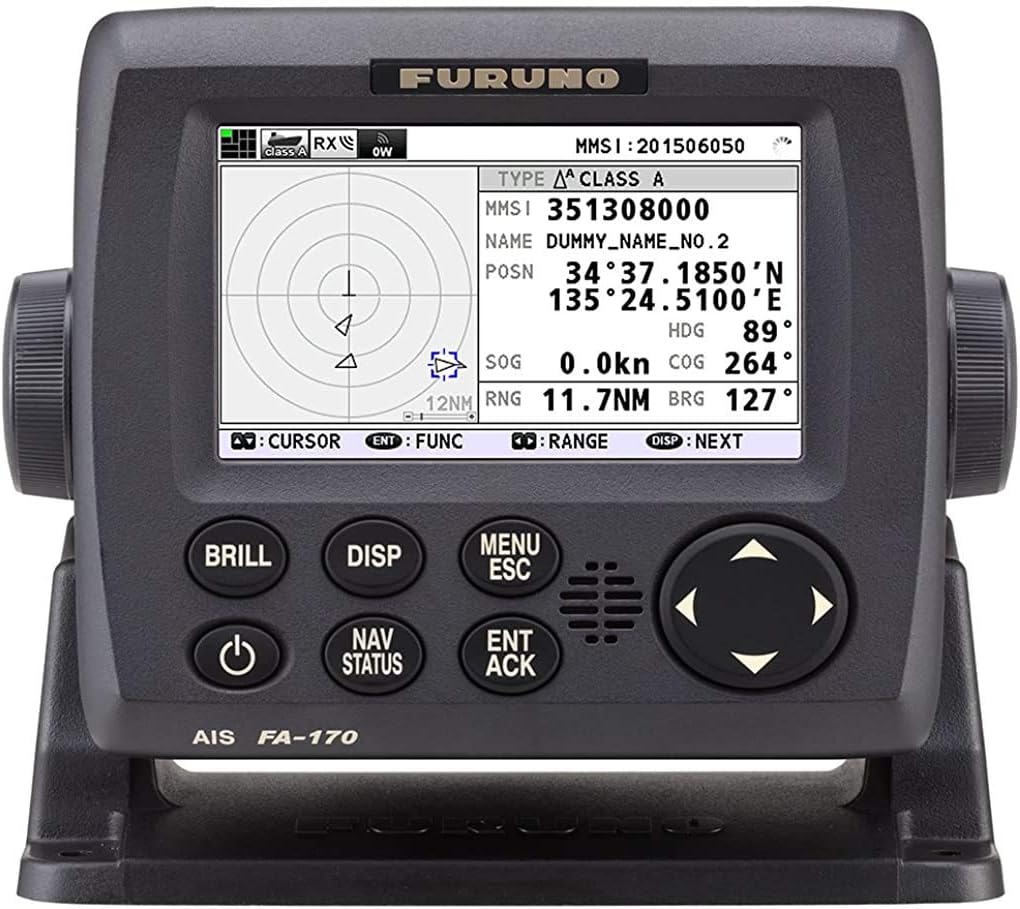
The Furuno FA170 stands out as a Class A transponder with immense data handling capabilities. It stores up to 2048 targets and provides detailed lists of dangerous contacts for advanced navigation.
We may earn a commission when you buy through this link, at no additional cost to you.
Its multiple input output ports and LAN connectivity make it perfect for integrating into complex marine networks. The alarm output port further enhances safety by alerting the crew to critical situations.
While the cost is significant, the performance and durability justify the investment for commercial vessels. Installation may require professional help due to its extensive port configuration.
This unit is essential for ships that need top-tier tracking and communication features. We recommend it for professional mariners requiring the highest level of system integration.
Storing over 2000 targets allows for extensive historical tracking and real-time situational awareness.
With LAN and alarm ports, this transponder acts as a central hub for marine communication systems.
We may earn a commission when you buy through this link, at no additional cost to you.
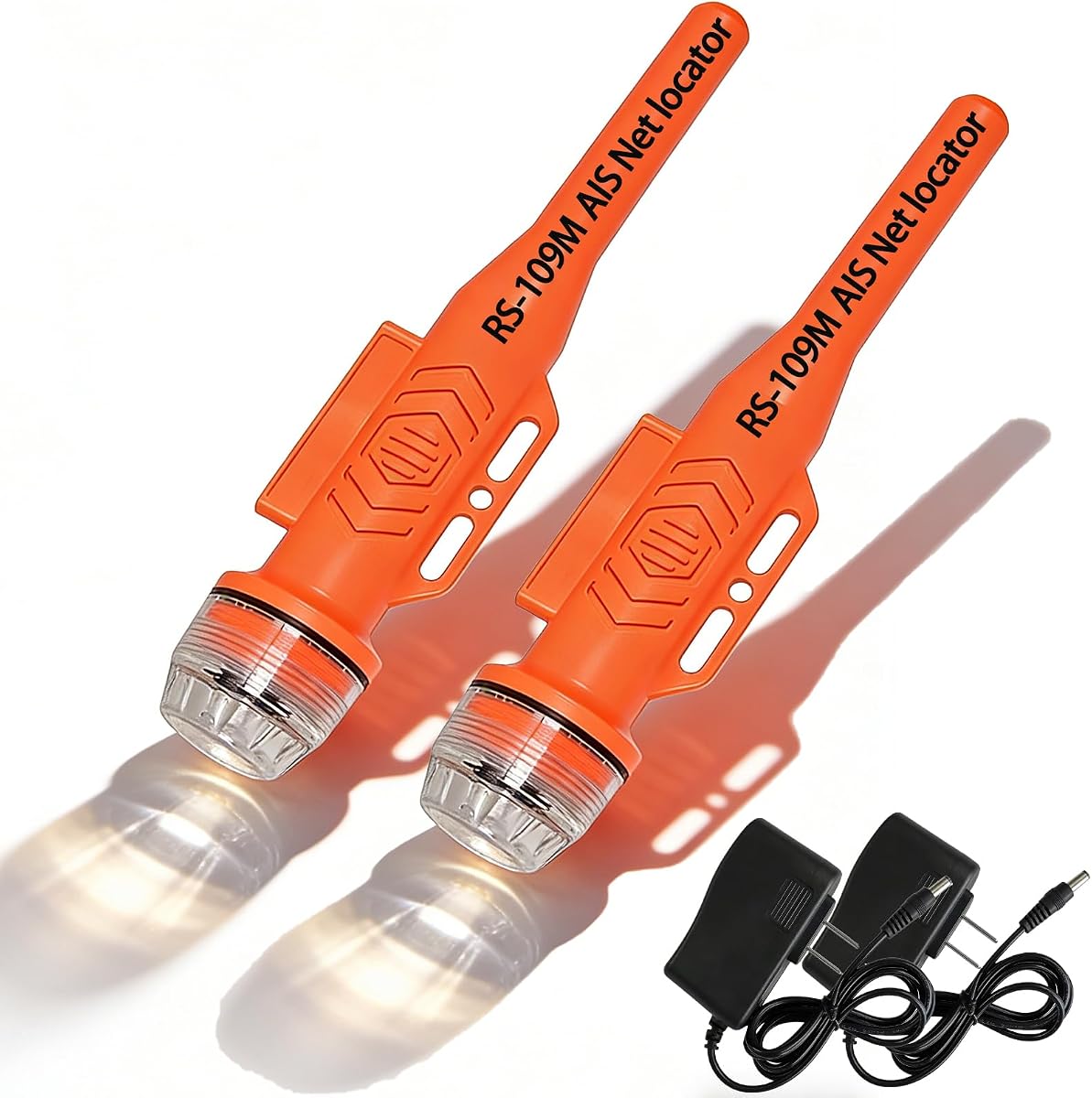
The RS-109M Marine Net Locator is designed specifically for tracking nets and buoys in open waters. It transmits data directly to onboard receivers, providing instant awareness of buoy status.
We may earn a commission when you buy through this link, at no additional cost to you.
Equipped with high-sensitivity GPS and a 3000mAh battery, it supports continuous signal transmission for up to two weeks. The IPX7 waterproof design ensures it withstands submerged marine conditions.
While the range is limited to 10 nautical miles, this is sufficient for most fishing and buoy retrieval tasks. The extended battery life reduces maintenance frequency significantly.
This device is perfect for fishermen needing to track gear without constant visual contact. We recommend it for specialized tracking needs rather than general vessel safety.
A capacity 3000mAh battery supports up to two weeks of continuous transmission reducing maintenance.
Fully sealed housing meeting IPX7 standards ensures dependable performance even when fully submerged in seawater.
We may earn a commission when you buy through this link, at no additional cost to you.
This bundle combines VHF communication with AIS tracking, offering a complete solution for marine safety. It includes a fixed mount and is compatible with Raymarine multifunction displays.
We may earn a commission when you buy through this link, at no additional cost to you.
Users appreciate the streamlined setup and robust accessory group that supports various installation scenarios. The Ray90 VHF and AIS700 bundle provides reliable performance in challenging conditions.
While it is designed for Raymarine users, the system offers excellent value for those already invested in that ecosystem. Some users note that additional calibration might be required for optimal display integration.
This bundle is ideal for boat owners looking to upgrade both comms and tracking in one go. We recommend it for Raymarine loyalists seeking seamless integration.
Combining VHF and AIS simplifies your dashboard and reduces clutter on your boat.
Compatible with Raymarine multifunction displays to ensure data flows smoothly across your navigation system.
We may earn a commission when you buy through this link, at no additional cost to you.
The ACR RESQLINK AIS is a personal locator beacon designed to send distress alerts to nearby vessels and satellites. It features Return Link Service to confirm rescue teams have received the signal.
We may earn a commission when you buy through this link, at no additional cost to you.
Its small, lightweight design allows it to be easily clipped to life jackets. The NFC technology allows mobile devices to show battery life and test status effortlessly.
While it offers global coverage, the signal range is limited compared to ship-based transponders. It serves best as a backup safety measure rather than a primary navigation tool.
This beacon is essential for individuals on the water, such as kayakers or sailors. We recommend it for those needing an extra layer of personal safety protection.
The Return Link Service provides peace of mind by confirming that rescue teams have received your distress signal.
Compatible with COSPAS-SARSAT and MEOSAR systems to ensure help can find you anywhere globally.
We may earn a commission when you buy through this link, at no additional cost to you.
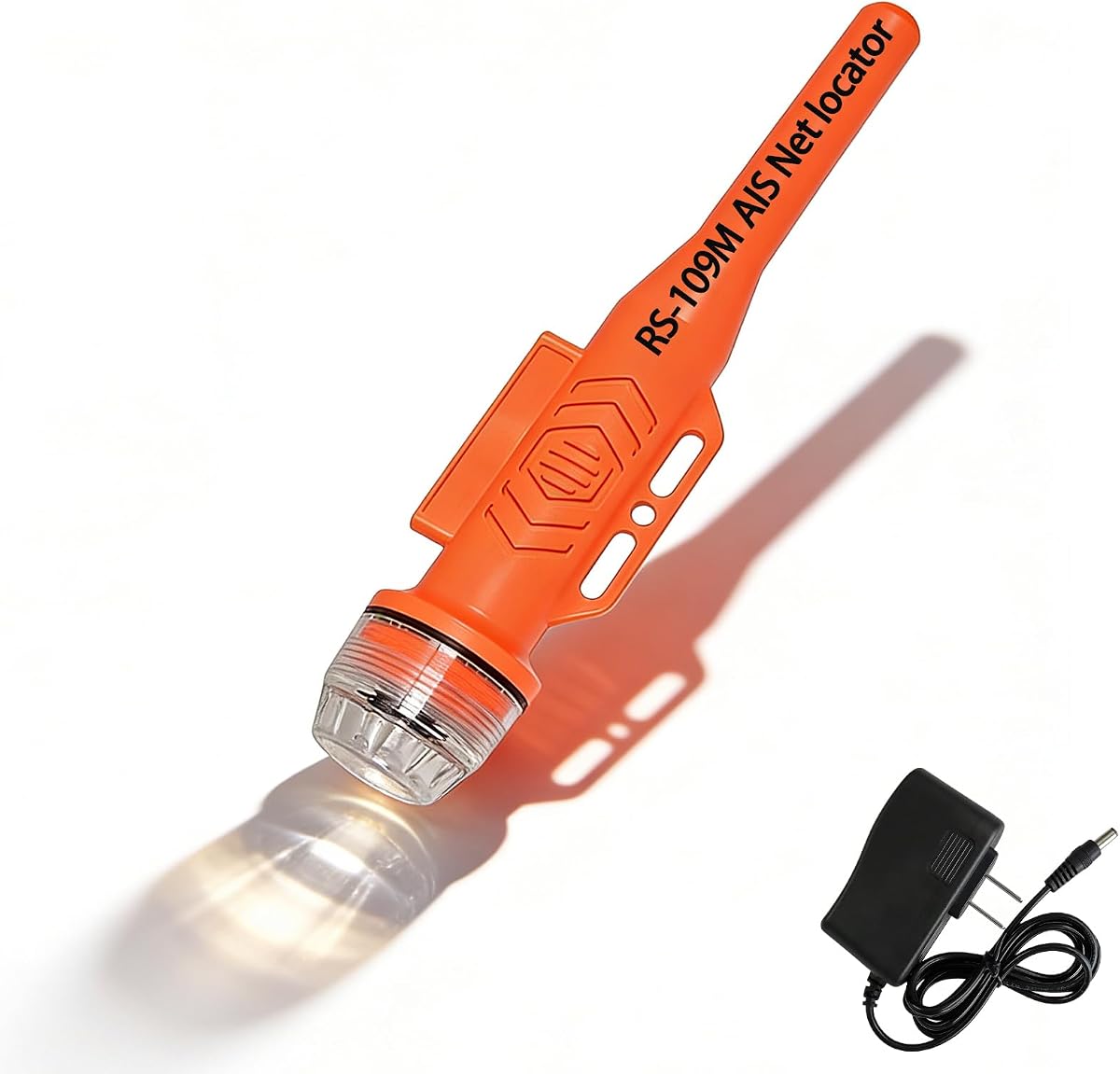
This single version of the RS-109M offers similar tracking capabilities for individual buoys or nets. It provides accurate GPS positioning and reliable navigation updates for open waters.
We may earn a commission when you buy through this link, at no additional cost to you.
The extended battery life supports continuous transmission for up to two weeks, which is ideal for long fishing trips. Its IPX7 waterproof design ensures it remains functional even when submerged.
With a 10 nautical mile signal range, it covers most coastal needs effectively. The main limitation is its range compared to long-distance commercial tracking systems.
This unit is perfect for hobbyists needing to track a specific point on the water. We recommend it for those requiring reliable but localized tracking.
High-sensitivity GPS ensures quick updates for reliable retrieval of equipment.
A high capacity battery reduces maintenance frequency significantly.
We may earn a commission when you buy through this link, at no additional cost to you.
The Icom M94D is a VHF transceiver with an integrated AIS receiver, offering situational awareness and voice communication. Its built-in AIS receiver shows nearby vessel traffic on screen.
We may earn a commission when you buy through this link, at no additional cost to you.
With 1500 mW audio output, it delivers clear calls even in noisy engine rooms. The float and flash feature ensures that if dropped, it remains visible for recovery.
While it is not a full transponder capable of transmitting data, it provides excellent monitoring for the budget. The 6W RF power and long battery life add to its reliability.
This radio is ideal for recreational boaters who need voice comms and traffic monitoring. We recommend it for those seeking affordable situational awareness.
Class-leading 1500 mW speaker ensures calls stay intelligible in noisy conditions.
Floats and flashes when dropped, making it easy to retrieve in open waters.
We may earn a commission when you buy through this link, at no additional cost to you.
The Icom M510 EVO is a modern VHF transceiver with built-in AIS and NMEA 2000 support. It offers seamless integration with existing navigation networks.
We may earn a commission when you buy through this link, at no additional cost to you.
Designed for easy connectivity, it allows you to access AIS data directly from your display. Its sleek form factor fits well in new and existing helm setups.
Users note that it lacks a standalone GPS antenna, relying on external connections for precise location. However, the integration benefits far outweigh this minor inconvenience.
This radio is perfect for tech-savvy boaters wanting streamlined systems. We recommend it for those upgrading to NMEA 2000.
NMEA 2000 support ensures seamless data sharing with modern navigation displays.
EVO series design features streamlined aesthetics and improved usability.
We may earn a commission when you buy through this link, at no additional cost to you.
The FLIR RAYMARINE AIS700 is a Class B transceiver designed for use with Raymarine multifunction displays. It offers full transmit and receive AIS for enhanced situational awareness.
We may earn a commission when you buy through this link, at no additional cost to you.
With a built-in antenna splitter, installation is simplified for existing VHF antennas. Its SO-TDMA networking ensures longer range and faster performance.
Users note that setup requires specific Raymarine software for diagnostics. While slightly expensive, it delivers reliable communication and safety features for Raymarine users.
This is the ideal choice for vessels equipped with Raymarine systems. We recommend it for those prioritizing display integration.
Built-in antenna splitter simplifies installation with existing VHF antenna systems.
Full transmit and receive capabilities provide a complete view of nearby traffic.
We may earn a commission when you buy through this link, at no additional cost to you.
Choosing the right AIS transponder requires considering several factors to ensure your vessel meets safety standards and operational needs.
Class A transponders are required for commercial vessels over 300 tons and those carrying passengers. They transmit more data and have higher priority in crowded waters. Class B transponders are designed for recreational boats and smaller commercial vessels. They are generally more affordable and sufficient for most leisure needs.
Choose Class A if you operate a commercial vessel or require high-priority data. Otherwise, Class B is sufficient for recreational boaters.
Some transponders come with built-in displays, while others rely on your chartplotter to visualize data. Built-in displays offer convenience if you lack a multifunction display. However, chartplotter integration reduces clutter on your deck.
Select a unit based on whether you need standalone visibility or rely on an existing screen.
Modern transponders offer various connectivity options including NMEA 2000, NMEA 0183, USB, and Ethernet. Ensure your boat's existing wiring supports the chosen interface. Proper connectivity allows seamless data transfer to your navigation tools.
Verify your boat's wiring system before purchasing to avoid installation issues.
Marine electronics must withstand harsh conditions. Look for units with high waterproof ratings like IPX7. This ensures the device remains functional even if submerged in seawater.
Always prioritize high waterproof ratings for equipment placed on deck or exposed to weather.
For portable or buoy trackers, battery life is crucial. Some units offer weeks of transmission on a single charge. Ensure the battery supports your typical trip duration.
Check battery capacity and transmission duration to avoid signal loss during extended trips.
Prices vary significantly between basic Class B units and high-end Class A models. Determine your operational needs before investing in premium features. Often, mid-range options offer the best balance of features and cost.
Set a clear budget and prioritize essential safety features over luxury add-ons.
To use your AIS transponder effectively, ensure it is correctly configured with your ship's details such as MMSI and vessel name. Follow the manufacturer's setup instructions to input this data accurately.
Regularly test the unit to confirm it is transmitting and receiving signals. Most units have a test mode that allows you to verify functionality without activating distress signals.
Maintain your transponder by keeping the antenna clean and free of corrosion. Protect the unit from direct saltwater spray and perform routine checks on connections and power supplies.
An AIS transponder is used to broadcast your vessel's position, speed, and identity to nearby ships. It also receives data from other vessels, improving situational awareness and reducing collision risks.
Class A is required for commercial vessels over 300 tons or carrying passengers. Class B is suitable for most recreational boats and smaller commercial vessels not required to carry Class A.
Most AIS transponders rely on an external GPS source to transmit accurate position data. Without GPS, the unit cannot transmit your exact location, limiting its effectiveness for collision avoidance.
Basic Class B units can often be installed by the owner with standard tools. However, complex Class A systems may require professional installation to ensure compliance and safety standards.
Typically, an AIS signal reaches about 10 to 20 nautical miles depending on antenna height and environmental conditions. In some cases with tall antennas, the range may extend further.
While not mandatory for all recreational boats, it is highly recommended for safety. Some countries have specific regulations requiring AIS for certain sizes of recreational craft.
Selecting the right AIS transponder depends on your specific vessel and operational requirements. From the robust Furuno FA170 to the affordable RS-109M, there is an option for every budget.
Prioritize safety and compliance by choosing a model that meets your regulatory needs. Integration with existing systems is also key for a seamless experience on the water.
Always verify current availability and pricing before making a purchase. Our guide aims to simplify the process of finding the ideal AIS solution for your needs.