
HiLetgo 3pcs ESP8266
4.2Editor score
Three module pack value
AP STA and AP+STA modes
Compatible with Arduino IDE
Compare the top Arduino WiFi Module options for IoT projects in 2026 to find the best connectivity solution for your next embedded system or smart home device.
Wireless connectivity is essential for modern embedded systems and IoT projects. Choosing the right Arduino WiFi Module ensures reliable data transmission and seamless integration with cloud platforms and mobile devices for your applications.
We evaluated ten leading options based on performance, compatibility, and ease of use. This guide covers everything from budget-friendly ESP8266 modules to advanced boards with integrated Bluetooth and dual-core processing for complex tasks.
Each pick highlights specific strengths to help you match hardware to your project needs. Prices and availability change frequently so verify details on the product page before purchasing to ensure you get the best current value.
4.2Editor score

4.7Editor score

4.7Editor score
The following table provides a side-by-side overview of key specifications and features for each module to help you quickly identify the best fit for your specific project requirements.



The Arduino UNO R4 WiFi stands out as the top choice for advanced projects requiring robust wireless connectivity and powerful processing. With a rating of 4.7 stars it combines reliability with modern features that simplify complex development tasks significantly.
We may earn a commission when you buy through this link, at no additional cost to you.
Its dual-core architecture pairs the Renesas RA4M1 for general tasks with the ESP32-S3 for Wi-Fi and Bluetooth operations. This separation allows for efficient multitasking without sacrificing performance during high-demand applications like real-time data processing.
While the board offers significant capabilities like the 12-bit DAC and Qwiic connector users may find the initial setup more involved than traditional boards. However the added functionality justifies the learning curve for serious IoT and embedded system builders.
For developers needing a board that grows with their projects the UNO R4 WiFi is the definitive recommendation. It bridges the gap between hobbyist needs and professional requirements ensuring long-term viability for diverse applications.
The combination of ARM Cortex-M4 and ESP32-S3 provides the flexibility to handle logic and wireless tasks simultaneously without bottlenecks.
USB-C ensures faster power delivery and programming while CAN support opens doors for industrial and automotive integration projects.
We may earn a commission when you buy through this link, at no additional cost to you.
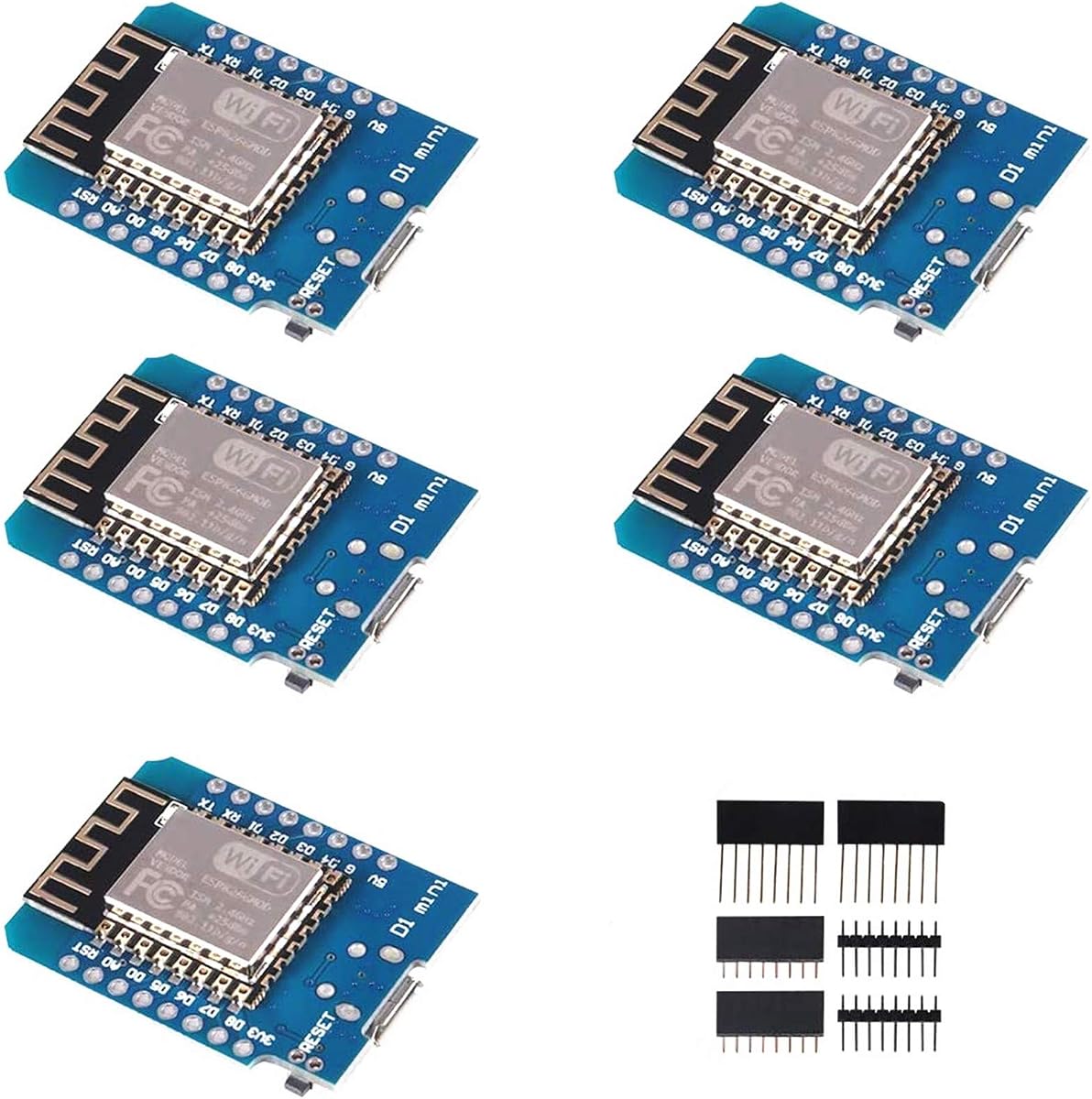
The HiLetgo 3pcs ESP8266 offers an accessible entry point into wireless development with a rating of 4.2 stars. It provides three modules in a single purchase allowing users to test multiple designs without repeated shipping costs.
We may earn a commission when you buy through this link, at no additional cost to you.
This module relies on the proven ESP8266 chip which supports AP STA and combined modes for flexible network configurations. Its small form factor makes it ideal for space-constrained projects where full boards are too large.
Users must manage external power and voltage level shifting since the board lacks integrated USB or 5V tolerance. These extra steps add complexity but are standard for this class of module and well documented online.
For those starting out or needing spare units for prototyping this pack delivers excellent utility at a minimal cost. It remains a staple in the maker community for simple sensor nodes and smart home control tasks.
Support for multiple WiFi modes allows the module to act as a client a hotspot or both simultaneously for complex network setups.
Compatibility with Arduino IDE simplifies coding for beginners while the LWIP stack ensures reliable network communication out of the box.
We may earn a commission when you buy through this link, at no additional cost to you.
The ESP8266 ESP-01S improves on the original with 4MB Flash and a stronger signal rating of 4.4 stars. This version addresses common limitations making it more reliable for firmware storage and remote connections.
We may earn a commission when you buy through this link, at no additional cost to you.
Its serial interface allows straightforward communication with microcontrollers like Arduino while the enhanced antenna design ensures better range in noisy environments. Users appreciate the ease of programming through standard AT commands or Arduino IDE.
Pin limitations and the lack of onboard power regulation mean careful design is needed for standalone applications. However for simple transmitters or receivers the cost savings outweigh these minor inconveniences significantly.
This module is perfect for projects needing persistent storage for WiFi credentials or logs without the expense of larger boards. It represents a solid balance of features and affordability for cost-conscious makers.
The 4MB Flash memory allows for storing complex firmware and local data reducing reliance on constant external storage solutions.
Enhanced RF performance ensures more stable connections in environments with interference or longer distances from the router.
We may earn a commission when you buy through this link, at no additional cost to you.
The Aitrip 5pcs ESP8266 provides excellent volume for those planning multiple deployments with a 4.4-star rating. Each module follows the standard ESP-01 pinout ensuring compatibility with existing breakout boards and adapters.
We may earn a commission when you buy through this link, at no additional cost to you.
Operating within a 3.0 to 3.6V range allows flexibility in power selection while the SPI Flash ensures reliable firmware execution. This makes it suitable for battery-powered IoT nodes where efficiency matters.
The absence of extra features like antenna extensions keeps the design simple but may limit range in challenging locations. Users should consider external antenna options if long-distance communication is required for their specific setup.
Buying in bulk reduces per-unit cost significantly which is ideal for production runs or class projects. The consistent quality across the pack ensures reliability when deploying multiple sensors across different locations.
Purchasing five units at once reduces shipping costs and ensures you have spares available for future prototyping or replacements.
The wide voltage range accommodates different power sources from regulators to batteries without compromising performance stability.
We may earn a commission when you buy through this link, at no additional cost to you.
The ELEGOO 3PCS ESP-32 delivers premium performance with dual-core processing and Bluetooth 4.2 alongside Wi-Fi achieving a 4.7-star rating. This combination is ideal for applications requiring high throughput and multiple connection types simultaneously.
We may earn a commission when you buy through this link, at no additional cost to you.
Features like USB-C programming and OTA update support streamline the development lifecycle allowing quick changes without physical access. Low power modes further extend battery life making it suitable for remote monitoring devices.
While more expensive than basic modules the enhanced capabilities justify the investment for complex tasks like sensor fusion or edge processing. The compact form factor fits well in modern enclosures without adding excessive bulk to the design.
For projects that demand speed and flexibility this set of three boards provides ample resources to tackle advanced IoT requirements. The included ecosystem support ensures compatibility with a wide range of sensors and peripherals.
Combining Wi-Fi and Bluetooth allows seamless communication with both networked devices and local controllers for richer interaction.
USB-C offers reversible connections and faster data transfer for efficient coding and debugging sessions.
We may earn a commission when you buy through this link, at no additional cost to you.
The Arduino Nano ESP32 combines compact design with modern features like MicroPython and HID support earning a 4.5-star rating. It offers the power of the ESP32-S3 in a footprint similar to the classic Nano series.
We may earn a commission when you buy through this link, at no additional cost to you.
USB-C connectivity ensures robust power delivery and programming convenience while Bluetooth 5.0 provides low-latency wireless links. This makes it suitable for interactive projects needing custom input devices or wearable tech.
Soldering headers adds an initial step compared to pre-soldered boards but ensures a more robust and space-saving final build. Users valuing flexibility and compact design will appreciate the versatility this board provides.
For developers comfortable with soldering this board opens up new possibilities for embedded applications without sacrificing ease of use. The MicroPython option lowers the barrier for those preferring high-level scripting over C++.
Support for MicroPython allows rapid prototyping and easier scripting for complex logic without deep embedded knowledge.
HID support enables the board to act as a keyboard or mouse for advanced interface designs without external ICs.
We may earn a commission when you buy through this link, at no additional cost to you.
This pack of four ESP8266 ESP-01S modules offers a good balance of quantity and quality with a 4.4-star rating. It is designed for scenarios requiring multiple units such as sensor networks or distributed home automation.
We may earn a commission when you buy through this link, at no additional cost to you.
The self-calibrated RF technology ensures optimal performance out of the box reducing the need for external tuning or adjustments during setup. This reliability is key for maintaining stable connections in varied environmental conditions.
While the modules lack advanced features like antenna extensions they are built from durable materials that allow repeated use across different projects. This durability makes them a practical choice for hobbyists and educators.
Users looking to deploy several nodes can benefit from the bundled savings and consistent performance across the set. It is an excellent choice for large-scale experiments where budget and reliability are primary concerns.
RF calibration ensures uniform behavior across all four modules simplifying network planning and configuration.
High-quality materials ensure the boards withstand repeated soldering and unsoldering cycles during prototyping phases.
We may earn a commission when you buy through this link, at no additional cost to you.
The 5PCS ESP8266 ESP-01S pack provides ample flash storage for complex projects with a 4.5-star rating. The 4MB capacity allows for extensive firmware and local data logging without external chips.
We may earn a commission when you buy through this link, at no additional cost to you.
Support for 115200 baud rates ensures fast data transmission which is crucial for real-time telemetry or high-frequency sensor readings. This performance is paired with a reliable serial interface that integrates easily with microcontrollers.
Users must adhere strictly to 3.3V power to avoid damage but this is manageable with standard regulators. The included documentation guides setup effectively ensuring minimal frustration for new users.
For those needing memory headroom or multiple units this bundle offers significant utility at a competitive price. It is particularly well suited for data logging devices requiring on-board storage capabilities.
The 4MB Flash allows storing thousands of sensor readings locally reducing reliance on constant cloud connectivity for data preservation.
High baud rates enable rapid serial communication between the module and the host microcontroller.
We may earn a commission when you buy through this link, at no additional cost to you.
The 5pcs ESP8266 ESP-12F pack offers a NodeMCU alternative with more GPIO pins and USB for a 4.5-star rating. It includes an onboard power supply making it easier to power from USB sources directly.
We may earn a commission when you buy through this link, at no additional cost to you.
With 11 digital pins and analog input it provides more flexibility for connecting sensors than smaller modules. This makes it well suited for complex sensor arrays where pin availability is a constraint.
The micro USB connection is convenient though less robust than USB-C. For hobbyists familiar with the NodeMCU ecosystem this provides a familiar interface and scripting options.
This pack is ideal for projects needing multiple pins and power regulation without external components. The Lua support and Arduino compatibility offer versatile programming environments for various user preferences.
With eleven GPIO pins users can connect a larger variety of peripherals without multiplexing solutions.
The onboard switching power supply ensures stable voltage levels even when powered from a USB port.
We may earn a commission when you buy through this link, at no additional cost to you.
The 10-Pack ESP8266 ESP-01 offers ultimate value for large deployments with a perfect 5.0-star rating. It provides ten units for bulk projects ensuring spares are available without repeated orders.
We may earn a commission when you buy through this link, at no additional cost to you.
Processing prowess and storage capacity make these modules robust for complex tasks despite their compact size. Users can run algorithms and retain data efficiently which is crucial for standalone IoT nodes.
The three distinct WiFi modes allow flexible network configurations suitable for diverse scenarios from home automation to industrial sensors. This versatility combined with affordability makes it a top choice for volume buyers.
For production runs or classroom kits this pack delivers reliability and cost-efficiency. It stands out as a practical choice for those needing to deploy many devices across different locations simultaneously.
Ten units allow you to scale your network immediately without worrying about inventory or shipping delays.
AP STA and AP+STA modes enable the modules to function as clients hosts or bridges for complex setups.
We may earn a commission when you buy through this link, at no additional cost to you.
Selecting the right WiFi module depends on your project requirements such as power usage processing needs and connectivity range. This guide covers the most important factors to consider before making a purchase.
Modern modules like the ESP32 and Arduino UNO R4 offer dual-core processors that can handle complex logic alongside WiFi tasks. For simple sensor nodes an ESP8266 may suffice but more demanding applications benefit from higher MHz speeds and extra cores.
Prioritize dual-core boards if you plan to run simultaneous tasks or advanced algorithms without lag.
Ensure the module supports the necessary protocols for your application. Bluetooth 5.0 is preferred for low-energy connections while Wi-Fi is essential for cloud access. Check if the module supports both simultaneously for maximum flexibility.
Look for modules offering both Wi-Fi and Bluetooth to future-proof your design and broaden application scope.
Battery-powered projects require modules with deep sleep modes and low standby currents. The ESP32 series often includes better power management features than older ESP8266 versions making them ideal for remote sensors.
Choose modules with explicit low-power modes to extend battery life significantly in portable devices.
Modules with USB-C are easier to program and power compared to micro-USB or UART-only designs. Ensure the module works directly with your Arduino IDE and supports necessary libraries for seamless development.
Opt for boards with standard interfaces like USB-C to simplify development and reduce wiring complexity.
Internal Flash memory determines how much firmware and data can be stored locally. 4MB is often sufficient for complex firmware and logging but larger capacities are helpful for advanced applications.
Check Flash size if you need to store configuration data or logs directly on the device.
Compact modules are better for wearable or space-constrained projects while larger boards may offer more pins. Consider your enclosure size and pin requirements when selecting the physical form factor.
Balance size with functionality to ensure the board fits your project without compromising capabilities.
Well-documented modules with strong community support reduce development time and troubleshooting issues. Look for boards with available tutorials and active forums to assist when you encounter challenges.
Choose modules with extensive documentation to ensure quick solutions and smoother development processes.
Always connect modules to a stable 3.3V power source unless the board specifies otherwise. Using 5V directly can damage the chip and cause irreversible failure.
Secure connections with breadboards or soldering to prevent intermittent signals. Use heat shrink or enclosures to protect the board from dust and static discharge.
Regularly update firmware to patch security vulnerabilities and improve performance. Monitor network traffic to ensure efficient use of bandwidth and battery power.
The Arduino UNO R4 WiFi or HiLetgo 3pcs ESP8266 are excellent starting points. They offer easy setup and extensive documentation to help you learn the basics quickly without frustration.
Yes many modern ESP32 modules feature deep sleep modes to conserve power. Look for low standby currents and efficient regulators to extend battery life significantly for portable devices.
Basic modules like the ESP-01 require external power or regulators. Development boards with USB ports often include onboard power regulators simplifying connections for most users.
Yes most ESP8266 and ESP32 modules are fully compatible with Arduino IDE. Select the correct board type from the Tools menu to upload code without additional drivers.
Range typically reaches 30 to 50 meters indoors depending on interference and antenna design. For longer distances consider external antennas or signal repeaters to boost coverage effectively.
Modules like the ESP32 support OTA updates via WiFi. Configure the OTA settings in your code to receive and install new firmware wirelessly without physical connections.
The Arduino UNO R4 WiFi leads as the best overall choice for its advanced features and dual-core performance. It offers the best blend of modern connectivity and processing power for complex IoT applications.
For budget-conscious projects the HiLetgo 3pcs ESP8266 provides reliable connectivity at a low cost. It is ideal for prototyping or simple sensor nodes where cost and availability matter most.
Always verify the latest prices and availability on the product page before purchasing to ensure you get the best deal. Technology evolves quickly so current offerings may change in features or pricing.