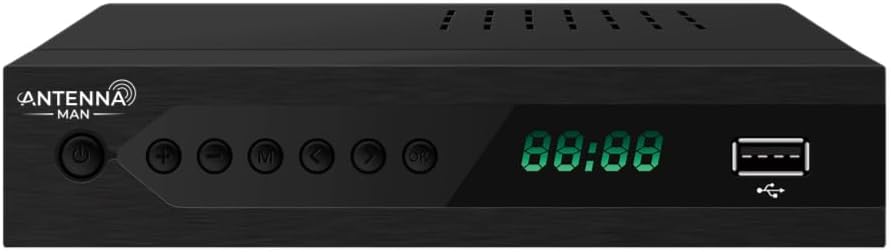
The Antenna Man Signal Meter
3.8Editor score
Real time signal strength
Plug and play setup
More channel access
Finding the right cellular signal meter for antenna aiming is essential for anyone installing cell boosters or optimizing wireless connections. These tools measure signal strength accurately, ensuring your antenna is pointed in the right direction for maximum performance and reliable communication.
We evaluated ten leading products based on frequency coverage, sensitivity, portability, and ease of use. Our comparison includes professional grade analyzers and budget friendly meters, providing a comprehensive view of what is available to meet various needs and technical requirements.
Each pick shows specific strengths like multi band support or real time spectrum analysis. Keep in mind that availability and pricing can change, so check current listings before purchasing to ensure you get the best value for your specific installation project.
3.8Editor score

4.3Editor score

4.6Editor score
As an Amazon Associate we earn from qualifying purchases.
This side by side comparison highlights key specifications and features of the top ten cellular signal meters available today to help you choose the right tool for your antenna alignment needs.


The SureCall Five-Band RF Signal Meter is a dedicated tool designed for installing cell phone signal boosters. With a rating of 4.3 stars, it stands out for its ability to measure signal strength across five critical cellular bands.
We may earn a commission when you buy through this link, at no additional cost to you.
Its high receiving sensitivity of -110dBm ensures that even weak signals are detected accurately. The five band coverage includes PCS, Cellular, AWS, and LTE frequencies, making it versatile for different network providers.
While the battery life is decent at 2.5 to 3.5 hours, users must be mindful of recharge times. The controllable backlight is a minor but useful feature for dark environments.
This meter is best for installers and hobbyists looking for a reliable, no-fuss tool to align antennas for boosters. Its simplicity and targeted frequency range make it a top choice.
The five bands cover most major US carrier frequencies ensuring accurate readings for diverse installation scenarios.
Its rechargeable NiMH battery pack and lightweight body make it easy to carry around during antenna setup.
We may earn a commission when you buy through this link, at no additional cost to you.
The Antenna Man Signal Meter offers a plug-and-play solution primarily aimed at television antenna alignment. With a 3.8 rating, it provides basic real-time signal strength feedback without complex configurations.
We may earn a commission when you buy through this link, at no additional cost to you.
It functions as an ATSC digital converter box with a TV tuner and recording capabilities. This dual function makes it useful for users who want to check signal quality for over-the-air TV broadcasts.
However, its limitations include a lower user rating compared to dedicated cellular meters. It is not suitable for measuring cellular booster signals or frequencies.
Consider this option if your focus is on optimizing indoor or outdoor TV antennas. Its affordability and ease of use make it a practical choice for basic home setups.
Beyond just signal metering this device acts as a converter box allowing for recording and viewing capabilities.
The plug-and-play design eliminates the need for technical expertise making it accessible for non-technical users.
We may earn a commission when you buy through this link, at no additional cost to you.
The Berkeley Varitronics Octopus is a professional grade meter designed for EV charging stations and cell boosters. With a high rating of 4.6, it excels in accuracy and comprehensive LTE measurement capabilities.
We may earn a commission when you buy through this link, at no additional cost to you.
It measures True RSRP, RSRQ, and RSSI which are critical metrics for network engineers. The device does not require SIM cards or apps simplifying the testing process significantly.
The premium price is justified by its precision and US manufacturing. However users may need time to learn all the features and settings effectively.
This meter is ideal for contractors and businesses needing reliable signal data. Its robust design and comprehensive metrics make it a top choice for professional deployments.
True RSRP RSRQ and RSSI measurements provide deep insights into network performance for precise antenna adjustments.
No SIM cards or subscriptions are needed allowing for quick setup and immediate signal testing in the field.
We may earn a commission when you buy through this link, at no additional cost to you.
The RF Explorer Pro Spectrum Analyzer is a powerful tool for engineers and RF professionals. While it lacks a specific user rating it offers advanced features for deep signal analysis across a wide range.
We may earn a commission when you buy through this link, at no additional cost to you.
Its 8-inch high definition touchscreen allows for clear visualization of data. The frequency range covers 15MHz to 6.1GHz which is excellent for diverse RF testing needs.
The advanced tools like Zero Span and Waterfall modes are great for troubleshooting. However the complexity and cost may not be necessary for simple antenna aiming tasks.
For users needing detailed spectrum analysis this is a strong contender. It is best suited for technical environments where precision and data visualization are paramount.
The 8 inch high definition touchscreen ensures clear visibility of spectrum data and measurement parameters.
Coverage from 15MHz to 6.1GHz allows for testing a wide array of RF signals and devices.
We may earn a commission when you buy through this link, at no additional cost to you.
The NetAlly AirCheck G3 Pro Kit is designed for Wi-Fi 6E and Bluetooth testing. It holds a perfect 5.0 rating due to its comprehensive features and kit completeness.
We may earn a commission when you buy through this link, at no additional cost to you.
It includes a tri-band spectrum analyzer and external directional antenna. This setup is perfect for locating access points and clients across 2.4GHz 5GHz and 6GHz bands.
The high cost limits its use to professional IT environments. It is not designed for cellular signal measurement but excels in wireless network surveys.
If you need to optimize Wi-Fi networks this kit is top tier. The included hardware and collaboration tools make it ideal for enterprise IT teams.
Includes mainframe directional antenna and spectrum analyzer adapter all essential for complete network testing.
Tri-band physical location detection helps quickly identify access points and clients for efficient site surveys.
We may earn a commission when you buy through this link, at no additional cost to you.
The Extech 480836 is an EMF strength meter ideal for measuring high frequency radiation. With a 4.3 rating it is popular for safety and environmental monitoring.
We may earn a commission when you buy through this link, at no additional cost to you.
It features a three-channel triaxial probe for isotropic measurements. This ensures accurate readings regardless of the signal direction which is useful for general RF exposure checks.
While it covers 50MHz to 3.5GHz it is not optimized for antenna tuning like dedicated RF meters. The interface is manual and straightforward.
Choose this for safety or environmental assessments. It is less suited for optimizing antenna alignment but useful for verifying signal presence.
The three-channel triaxial probe ensures accurate measurements regardless of signal direction for reliable EMF checks.
Coverage from 50MHz to 3.5GHz makes it suitable for various high frequency and mobile phone measurements.
We may earn a commission when you buy through this link, at no additional cost to you.
The MINI1300 Antenna Analyzer offers a large touch screen and wide frequency range for hobbyists. With a 4.4 rating it balances cost and features effectively for HF VHF and UHF testing.
We may earn a commission when you buy through this link, at no additional cost to you.
It supports single point and scanning modes with SWR measurement capabilities. The portable design makes it convenient for field tuning of amateur radio antennas.
A notable limitation is the non-updatable firmware which could limit future feature enhancements. However for basic tuning tasks it performs well.
This analyzer is great for DIY enthusiasts and HAM operators. Its affordability and usability make it a popular choice for personal projects.
The 4.3 inch large touch screen provides easy navigation and clear visibility of measurement data.
Continuous coverage from 0.1 to 1300MHz allows for testing a wide variety of HF VHF and UHF antennas.
We may earn a commission when you buy through this link, at no additional cost to you.
The SA6 6GHz Portable Spectrum Analyzer combines analysis and signal generation in one unit. It covers a broad frequency range from 35 to 6200MHz making it versatile for many wireless technologies.
We may earn a commission when you buy through this link, at no additional cost to you.
Its 3.2 inch touchscreen and physical buttons allow for easy operation. The device supports WiFi 2G 3G and 4G LTE signals which is useful for general signal testing.
Battery life is around 3 to 4 hours which is standard for this class. While reviews are limited its features suggest strong value for money.
This device is suitable for technicians and hobbyists needing a compact analyzer. It offers significant features at a fraction of the cost of pro-grade tools.
Integrates both spectrum analyzer and signal generator allowing for complete RF component testing in one device.
Lightweight and compact at 380g makes it easy to carry for on-site RF testing and antenna analysis.
We may earn a commission when you buy through this link, at no additional cost to you.
The Sa6 variant offers similar features to the main SA6 model with a focus on ruggedness. It covers 35 to 6200MHz and supports various wireless standards for field evaluation.
We may earn a commission when you buy through this link, at no additional cost to you.
It includes an integrated tracking generator for characterizing filters and amplifiers. The compact housing is lightweight and energy efficient for on-site use.
Accessories like extension cables and stylus are included. While less documented than other models it appears to be a practical alternative.
Ideal for technicians needing a portable analyzer with good battery life. Its design supports rapid RF environment assessment and basic diagnostics.
A small 5.9 by 3 inch housing is lightweight and built for durability in tight spaces.
Real time spectral measurement with fast scan speeds allows for rapid RF environment assessment and repeater diagnostics.
We may earn a commission when you buy through this link, at no additional cost to you.
The Channel Master TV Antenna Signal Strength Meter is designed for precise OTA antenna alignment. With a 3.9 rating it provides reliable signal level and SNR data via a color touchscreen.
We may earn a commission when you buy through this link, at no additional cost to you.
It supports all ATSC TV frequencies within the USA. The rechargeable battery and carrying bag make it convenient for installation tasks.
While it is priced higher than basic analog finders the digital display and SNR readings offer better accuracy. It is strictly for TV signals not cellular.
This is a great tool for DIY TV antenna installers. Its user friendly design and accessories ensure a smooth setup experience.
Digital display shows signal level and signal to noise ratio for accurate antenna positioning and alignment.
Includes a protective carrying case and stylus allowing for easy transport and operation in any environment.
We may earn a commission when you buy through this link, at no additional cost to you.
Choosing the right cellular signal meter depends on your technical needs budget and the type of signals you are measuring.
Ensure the meter covers the specific cellular bands you need such as 4G LTE 5G or PCS. Broad coverage ensures compatibility with different carriers and future networks.
Look for devices that explicitly list supported frequencies to avoid mismatches.
Accurate measurements are critical for optimal antenna performance. Devices with high sensitivity like -110dBm can detect weaker signals more effectively.
Professional meters often provide detailed metrics like RSRP and RSSI which offer deeper insights than basic signal bars.
A user-friendly interface with clear displays and intuitive controls saves time during installation. Touchscreens and backlighting help in various lighting conditions.
Plug-and-play devices reduce setup time and technical barriers for non-experts.
Field work requires portable devices that are lightweight and compact. Check battery life to ensure it lasts through your installation tasks.
Handheld designs with carrying cases make transport easier and protect the device from damage.
Long battery life prevents interruptions during prolonged testing sessions. Rechargeable batteries or standard cells offer convenience depending on the situation.
Devices offering 3 hours or more of continuous use are generally preferred for field work.
Advanced features like spectrum analysis or signal generation can be valuable for complex installations. However basic meters may suffice for simple tasks.
Evaluate if these features align with your needs before paying extra.
Balance your budget with the required features. Professional grade meters are expensive but offer accuracy and durability.
Budget options are great for hobbyists but may lack detailed measurements or robust build quality.
Choose established brands known for quality and support. User reviews provide real-world insights into reliability and customer service.
A good warranty can protect your investment against defects.
Start by charging the battery or inserting fresh ones. Power on the device and select the appropriate frequency band or mode for your signal type.
Hold the meter near the antenna input or connect it directly. Rotate the antenna slowly while watching the signal strength indicators to find the peak value.
After use turn off the device and store it in a protective case. Keep the screen clean and avoid exposure to extreme weather or direct sunlight.
A cellular signal meter measures the strength and quality of wireless signals to help align antennas for boosters or base stations. It ensures optimal performance by pointing the antenna towards the strongest source.
Some advanced models support 5G frequencies but many basic meters focus on 4G LTE and PCS. Check the frequency specifications carefully to confirm compatibility with your network.
Look for higher signal strength values or dBm ratings which indicate stronger signals. Many meters provide a visual or audio cue when the signal reaches a stable or optimal level.
Not always simple signal meters are sufficient for basic alignment. However spectrum analyzers offer detailed insights into interference and spectrum usage which are helpful for complex setups.
Dedicated TV signal meters are better for OTA antennas. Some cellular meters may not cover TV frequencies so verify the supported bands before using them for TV setups.
Battery life varies by model but typically ranges from 3 to 5 hours of continuous use. Rechargeable models are convenient but ensure you have enough power for field work.
We reviewed ten top options ranging from budget friendly finders to professional grade analyzers. Each tool offers unique strengths depending on your needs and technical expertise.
Consider your budget frequency requirements and whether you need basic alignment or detailed spectrum analysis before purchasing.
Always check current listings for availability and price changes to ensure you get the best value for your investment.