
INSWAN INS-1 Classic USB Document Camera
4.6Editor score
Includes bundled Documate software
Built-in LED lighting
Compact multi-joint structure
This guide compares the top 10 document cameras for teachers and professionals, focusing on image quality, connectivity options, software features, and overall
Document cameras have become essential tools for modern education and professional presentations. These versatile devices allow users to display physical documents, objects, and materials in high definition to an audience. Whether you are teaching remotely or showcasing products, a reliable camera ensures clear visibility.
We evaluated ten top-rated models based on resolution, connectivity, software capabilities, and build quality. Our analysis focuses on real-world performance in classrooms and meeting rooms. Each product was assessed for ease of use and compatibility with common platforms.
Each pick highlights key strengths and ideal use cases to help you decide. Note that availability and costs may shift over time. Use these insights to find a solution that fits your specific workflow and budget requirements effectively today.
4.6Editor score
4.5Editor score

4.6Editor score
The following table provides a side-by-side look at key specifications for each model. This helps you quickly compare sensor types, connectivity options, and unique features across the entire selection.


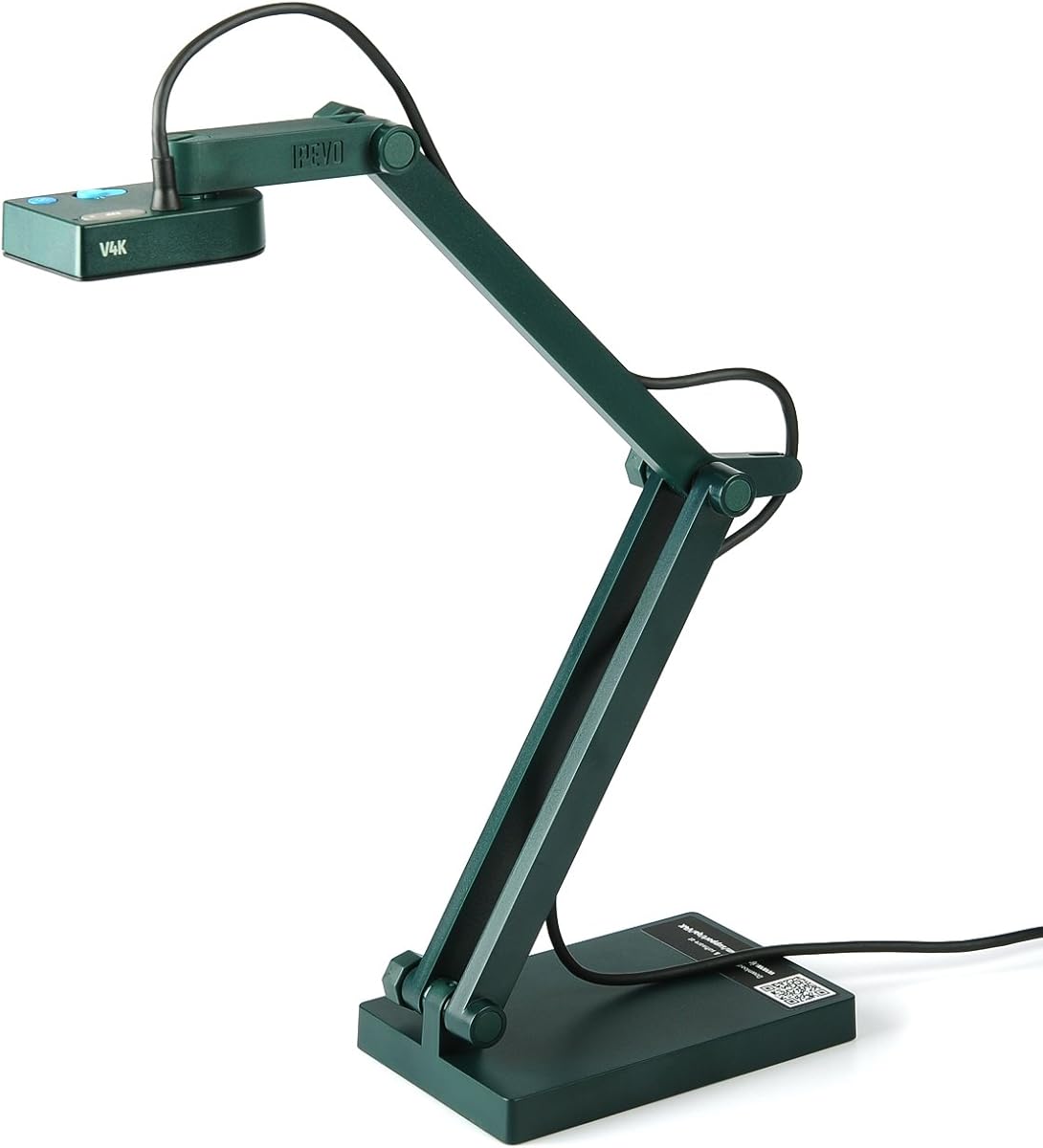
The IPEVO V4K stands out as a reliable choice for educators and professionals needing clear visual presentation. With an 8 Megapixel sensor, it captures detailed images suitable for textbooks and small objects alike. Its reputation for consistency makes it a favorite in remote teaching scenarios.
We may earn a commission when you buy through this link, at no additional cost to you.
This model utilizes a Sony CMOS Image Sensor which significantly reduces noise even in less than ideal lighting. The high frame rate ensures smooth streaming without lag, which is crucial for live demonstrations. The multi-jointed stand allows flexible positioning without needing extra clamps.
While the hardware is robust, the software experience is basic compared to some competitors. You may need to rely on third-party tools for advanced annotation or recording features. However, the plug-and-play nature minimizes setup time significantly for most users.
Ideal for teachers or presenters who prioritize image clarity over complex software suites. If you need a straightforward device that just works with your current setup, this is a strong recommendation to consider for your classroom or office.
The 8MP resolution ensures text and fine details remain crisp during projection or sharing sessions.
The stand design allows you to adjust angles quickly to capture various object sizes effectively.
We may earn a commission when you buy through this link, at no additional cost to you.
For those seeking value without sacrificing core functionality, the INSWAN INS-1 offers an impressive package. It delivers clear 8MP imaging and includes a dedicated software suite that adds annotation and recording capabilities directly out of the box. This makes it a compelling option for home classrooms.
We may earn a commission when you buy through this link, at no additional cost to you.
The inclusion of a built-in LED light helps manage exposure issues in dimly lit rooms. Users appreciate the multi-joint design that fits neatly on crowded desks. The ability to flip and rotate images manually adds utility when working with different document orientations.
Some users might find the viewing area slightly smaller than premium models, which could limit A3-sized material display. The build feels lighter than metal alternatives, but it holds up well under daily use. It is a practical choice for temporary or mobile setups.
We recommend this model for budget-conscious educators or small business owners needing quick visual aid. If you want software features without paying a premium, this unit covers the essentials effectively and performs reliably during standard presentations.
The Documate software provides annotation and recording tools often found in more expensive devices.
Built-in LEDs reduce shadows and improve visibility on flat documents or small objects.
We may earn a commission when you buy through this link, at no additional cost to you.
The THUSTAR 8MP combines portability with useful visual tools for dynamic environments. Its foldable design makes it easy to store and transport between rooms. Dual microphones help capture audio clearly, which is a nice addition for users who want all-in-one conferencing capabilities.
We may earn a commission when you buy through this link, at no additional cost to you.
Users can manually adjust image brightness and invert it for better visibility in different orientations. This flexibility helps when presenting materials that have specific lighting requirements. The A3 coverage ensures larger sheets fit comfortably under the lens without cropping important details.
Some users report that driver installation can be inconsistent across different operating systems. While mostly plug-and-play, occasional troubleshooting might be needed on older machines. However, once connected, the performance remains stable for most educational applications.
Choose this model if you move frequently between locations and need a device that packs down small. The audio features and lighting controls make it versatile for remote sessions where clarity is paramount. It balances mobility with solid imaging performance.
The foldable body minimizes desk clutter and allows for easy transport in a backpack or bag.
Dual microphones reduce ambient noise and improve overall call quality during video meetings.
We may earn a commission when you buy through this link, at no additional cost to you.
The Kitchbai 4K offers a modern interface and high-quality video suitable for contemporary workflows. It supports 4K output which provides exceptional detail for digital sharing. The inclusion of a USB-C cable ensures compatibility with newer laptops and tablets without needing adapters.
We may earn a commission when you buy through this link, at no additional cost to you.
Dual microphones and adjustable LEDs address common audio and lighting challenges in home offices. The foldable design keeps the workspace tidy and makes transport convenient. Users appreciate the manual image inversion feature which simplifies working with unconventional layouts.
Software capabilities are minimal compared to dedicated suites, limiting advanced editing options within the device itself. The stand is functional but may feel less sturdy than heavier metal alternatives. Despite this, it delivers consistent results for daily teaching tasks.
We suggest this camera for users with newer equipment who need high-resolution streaming quickly. If you value modern ports and portability over extensive software features, this model offers a strong balance. It is a practical tool for virtual classrooms.
USB-C compatibility ensures seamless connection with the latest laptops and mobile devices.
Adjustable LED lights help eliminate shadows on documents for clearer digital representation.
We may earn a commission when you buy through this link, at no additional cost to you.
The PAKOTOO 8MP focuses on giving users granular control over image settings. It allows manual adjustment of exposure in ten levels, which helps fine-tune visuals for specific lighting conditions. The ability to flip images both horizontally and vertically provides significant flexibility for different display needs.
We may earn a commission when you buy through this link, at no additional cost to you.
Dual microphones and foldable design enhance its utility in portable teaching scenarios. The 3-level LED light system helps manage brightness without external help. Most users find it effective for displaying small objects and standard documents clearly during calls.
Some users might find the setup process slightly complex compared to simpler plug-and-play options. The lighting system works well but may require testing to find the best angle. However, once configured, it maintains a steady performance throughout sessions.
Ideal for presenters who need precise control over image brightness and orientation. If you deal with varied lighting environments, the exposure controls are a useful feature. It serves well as a secondary device for specialized presentation needs.
Ten-level exposure adjustment allows for fine-tuning image brightness to match room lighting.
Manual left, right, up, and down image flip supports various presentation orientations easily.
We may earn a commission when you buy through this link, at no additional cost to you.
The OKIOCAM S-4K distinguishes itself through its AI-powered software integration. The OKIOPoint feature allows you to track and zoom in on specific areas automatically, making presentations more engaging. This level of interactivity is rare at this price point and adds significant educational value.
We may earn a commission when you buy through this link, at no additional cost to you.
It features an 8MP Sony Exmor R sensor that performs well in low light conditions. The portable design fits well on smaller desks without sacrificing build quality. Durability tests confirm the hinges can withstand frequent rotations, ensuring long-term reliability.
The viewing area is somewhat limited compared to larger models, which might restrict A3 paper usage. Some users may find the required software adds a slight learning curve initially. However, the interactive tools make up for the minor size constraint.
We recommend this camera for interactive lessons where student engagement is a priority. The combination of hardware quality and smart software tools makes it a strong contender. It is ideal for teachers who want to modernize their teaching methods.
OKIOPoint tracks your mouse movements to zoom in on specific document areas automatically.
Hinges tested for 10,000+ rotations ensure the arm withstands daily classroom adjustments.
We may earn a commission when you buy through this link, at no additional cost to you.
The IPEVO VZ-X offers true wireless freedom that wired models cannot match. With Wi-Fi, HDMI, and USB modes, it fits almost any presentation environment. The battery life supports full class sessions without needing a power outlet, which is crucial for mobile teaching.
We may earn a commission when you buy through this link, at no additional cost to you.
Its 8MP sensor delivers sharp visuals in HD and near 4K quality depending on the connection. The swiveling head allows capturing objects from unique angles easily. Users value the ability to connect directly to Apple TV or Android devices without a computer.
The premium price reflects the advanced connectivity options and battery technology. It is an investment for institutions needing flexibility across different rooms. Setup requires some initial configuration, but the flexibility it provides is worth the effort.
Choose this model if you need a camera that moves around the room with you. It is perfect for active learning environments where mobility is key. The wireless capabilities make it a standout choice for modern professional setups.
Wireless connectivity lets you present from anywhere in the room without cable constraints.
Support for HDMI and USB alongside Wi-Fi ensures compatibility with all display types.
We may earn a commission when you buy through this link, at no additional cost to you.
The OKIOCAM S2 Pro stands out with its 13MP sensor capable of true 4K resolution. This level of detail is perfect for capturing intricate textures or small text. The metal base provides stability, ensuring the image does not shake during live demonstrations.
We may earn a commission when you buy through this link, at no additional cost to you.
The OKIOPoint software adds smart tracking functionality that enhances classroom engagement. Fast autofocus helps switch between documents smoothly. It includes essential connectivity adapters and a storage pouch, making it ready for immediate use.
Due to its higher resolution and build quality, it sits at a higher price point. The footprint is larger than portable models, which may not suit compact desks. However, for static setups needing top image quality, it is hard to beat.
Ideal for professionals or advanced educators requiring maximum detail in their visual materials. If your lessons rely on fine details, this camera ensures clarity. It is a robust tool for high-stakes presentations.
13MP sensor captures true 4K resolution for crisp visuals even in low light.
The weighted metal base prevents tipping and keeps the image steady during use.
We may earn a commission when you buy through this link, at no additional cost to you.
The OKIOCAM T-4K is designed to capture larger documents like ledger-size materials effectively. Despite its portable frame, it offers a generous viewing area that fits open books or maps. The 8MP Exmor R sensor ensures images remain sharp even on larger surfaces.
We may earn a commission when you buy through this link, at no additional cost to you.
It includes the OKIOPoint pointer for smart zooming which simplifies navigation during lessons. The streaming performance is smooth with minimal lag for full HD content. Users appreciate the compact design which leaves plenty of desk space available.
While the viewing area is wide, vertical height adjustment is somewhat limited. The lighting is standard and might require external help for very dark rooms. However, for general educational purposes, it delivers consistent and reliable performance.
We recommend this model for users who frequently handle large blueprints or open textbooks. If portability and large coverage are both needs, it is an excellent solution. It balances utility and size effectively.
Designed to capture ledger-size materials or open books in full view.
Comprehensive software includes annotation and stop-motion tools for engaging lessons.
We may earn a commission when you buy through this link, at no additional cost to you.
The OKIOCAM S2-4K uses a back-illuminated sensor that excels in low-light environments. This design reduces noise and improves color reproduction without extra lights. The near-ledger size coverage makes it versatile for various document sizes. It supports USB-C adapters for modern iPads directly.
We may earn a commission when you buy through this link, at no additional cost to you.
AI tracking through OKIOPoint allows for dynamic presentations that keep students focused. The durable multi-joint arm withstands daily use. It is compact enough for small desks but offers robust performance during virtual meetings.
Users might prefer a more adjustable lighting system than the fixed options available. The price reflects the sensor technology, which might be higher than basic models. However, for low-light performance, it is a unique offering in the category.
Choose this if you present in dimmer rooms or require iPad compatibility. The sensor quality ensures visibility even under faint projector lights. It is a sophisticated tool for modern educational setups.
Back-illuminated sensor doubles light sensitivity for sharp images in dark environments.
USB-C adapter included for direct connection with iPad and interactive displays.
We may earn a commission when you buy through this link, at no additional cost to you.
Selecting the right device depends on your specific workflow, room conditions, and audience size. Here are the key factors to consider before making a purchase.
Look for cameras with at least 8MP resolution to ensure text remains legible during projection. Higher resolution like 4K provides better detail for intricate designs or small parts. A good sensor, such as CMOS, helps reduce noise and improve color accuracy.
Prioritize resolution to ensure clear visuals for your audience regardless of screen size.
Check if the camera supports USB, HDMI, or Wi-Fi depending on your setup. USB offers reliable plug-and-play use while Wi-Fi provides mobility. Ensure it works with your current devices like laptops or tablets.
Choose connectivity that matches your available ports and presentation style.
Built-in LED lights are essential for illuminating documents evenly. Manual focus and brightness adjustment prevent blurry images. A good autofocus system ensures quick switching between different materials without delays.
Look for adjustable lighting to maintain clarity in varying room conditions.
Some models include software for annotation, recording, and zooming. If you need advanced features, ensure the software is compatible with your OS. Standalone cameras require third-party apps which may limit functionality.
Select a model with software that fits your teaching or presentation needs.
Foldable designs are ideal if you need to transport the camera between rooms. A sturdy base prevents tipping while a flexible arm allows for varied angles. Weight matters if you carry it often in a bag.
Pick a design that balances durability with the need for easy movement.
Price varies based on features like resolution, wireless options, and included accessories. Determine which features are must-haves versus nice-to-haves. Sometimes mid-range models offer the best balance of quality and cost.
Balance your budget against the essential features you need for daily use.
Begin by connecting the camera to your computer using the recommended cable. Allow the system to install necessary drivers automatically before launching your conferencing software.
Adjust the height and angle of the camera arm to center your document or object. Use the lighting controls to eliminate shadows and ensure the image is clear on the screen.
Clean the lens gently with a soft cloth to avoid scratches. Store the device in a dry place or included pouch when not in use to maintain its condition.
Most document cameras work seamlessly with Zoom and Microsoft Teams by appearing as a standard webcam. You select the camera in the video settings of the application to share the visual feed during meetings.
USB models require a physical connection to your computer for stability, while Wi-Fi models allow wireless connection. Wireless options offer mobility but may depend on network strength for consistent video.
Many models come with software that supports video recording. Even without bundled software, you can use third-party tools on your computer to record the video feed from the camera.
Most cameras have buttons or settings to flip the image vertically or horizontally. This helps when the display appears mirrored or upside down for your audience.
Yes, most modern document cameras are compatible with Mac OS. You may need to check system requirements for specific versions to ensure full functionality and driver support.
If the built-in light is insufficient, try adjusting the room lighting or using a brighter external lamp. Some cameras allow exposure adjustments to compensate for low light conditions.
We reviewed ten top models ranging from budget-friendly options to premium wireless solutions. Each device offers unique features suited for different classroom and office environments.
Prioritize resolution and connectivity first to ensure your visual content is shared clearly. Choose a device that fits your physical space and budget constraints for long-term satisfaction.
Remember to check current availability and prices before making a decision. Technology updates often bring new features to the market.