
RME Fireface UFX II USB 2 Audio Interface
5.0Editor score
24-bit/192kHz resolution
30-in/30-out
ARC USB Remote
This guide compares the top 10 Firewire Audio Interface for PC options for recording and production in 2026, highlighting features like compatibility, speed
Finding the right audio interface for your PC can be challenging when legacy Firewire technology meets modern computing needs. This guide explores top options that balance compatibility with performance.
We compared ten leading models based on user ratings, connectivity features, and audio fidelity to help you make an informed decision for your studio setup.
Each pick showcases key strengths and ideal use cases so you can select the best fit. Please note that product prices and availability may change over time.
5.0Editor score

5.0Editor score

4.4Editor score
The following table provides a side-by-side comparison of all ten products reviewed in this guide to help you quickly identify the best match for your needs.



The PCIE-1394A Expansion Card is a straightforward solution for users who need Firewire connectivity on modern PCs. With a rating of 4.4 it offers reliable performance for legacy devices.
We may earn a commission when you buy through this link, at no additional cost to you.
It provides four ports including three 6Pin and one 4Pin to handle various Firewire equipment. The card supports IEEE 1394A protocols ensuring data transfer speeds up to 400Mbps.
While it works on many Windows versions some systems may require a legacy driver to function correctly. This is a minor trade-off considering the specialized nature of the product.
Ideal for professionals working with older camcorders or audio equipment this card brings new life to existing hardware setups without needing a full system upgrade.
The card connects seamlessly to DV camcorders and external hard drives using standard Firewire protocols.
Plug and play functionality allows users to install the card quickly without complex software configurations.
We may earn a commission when you buy through this link, at no additional cost to you.
The RME Fireface UFX II stands out as a top-tier choice for professional audio production. It holds a perfect 5.0 rating reflecting its high quality and reliability.
We may earn a commission when you buy through this link, at no additional cost to you.
Features like 24-bit/192kHz resolution and 30-in/30-out capabilities make it suitable for complex recording sessions. The included ARC USB remote adds significant convenience for monitoring.
Although the cost is high the value provided through precision engineering and driver stability justifies the investment for serious musicians and engineers.
This interface is perfect for those who demand studio-grade performance at home. It ensures your recordings sound exactly as intended with minimal latency.
The interface captures every detail with pristine clarity thanks to high-end converters and preamps.
Users can adjust settings via the ARC USB remote for a more flexible workflow.
We may earn a commission when you buy through this link, at no additional cost to you.
The M-AUDIO M-Track Duo offers an accessible entry point into audio recording. With a 4.4 rating it delivers solid performance for the price.
We may earn a commission when you buy through this link, at no additional cost to you.
It features transparent Crystal Preamps and two combo inputs allowing for vocal and guitar recording. The included MPC Beats software adds value for beginners.
While the build is simple it provides everything needed for podcasting or streaming. The USB/Direct switch ensures zero latency monitoring which is crucial for live performance.
This interface is ideal for hobbyists or those starting their music journey. It balances cost and capability effectively for home studio use.
Crystal Preamps ensure optimal sound capture from various microphones without noise.
Includes MPC Beats software to help you start producing music immediately.
We may earn a commission when you buy through this link, at no additional cost to you.
The Focusrite Scarlett 2i2 4th Gen brings modern features to a classic interface. It has a 4.6 rating indicating high user satisfaction.
We may earn a commission when you buy through this link, at no additional cost to you.
Auto Gain sets levels automatically and Clip Safe prevents clipping which simplifies recording for less experienced users. Air mode adds presence to vocals and guitars.
Despite the higher price it offers studio-quality sound and a complete software suite. This makes it a versatile tool for both beginners and pros.
Perfect for those upgrading from older USB models this interface delivers reliable performance. It ensures you never lose a great take during recording.
Auto Gain and Clip Safe help maintain optimal levels without constant adjustment.
Air mode adds rich harmonic drive to make your recordings stand out.
We may earn a commission when you buy through this link, at no additional cost to you.
The RME Fireface UCX II balances portability with professional power. A 4.3 rating reflects its solid performance in various environments.
We may earn a commission when you buy through this link, at no additional cost to you.
With 20-in/20-out connectivity it handles complex setups on the go. It supports macOS Windows and iOS making it versatile for different workflows.
While it may require a power supply in some cases the audio quality is top-notch. RME drivers are known for stability which reduces recording interruptions.
Recommended for mobile producers or those needing flexibility this interface delivers reliable results. It brings studio features into a compact package.
Works seamlessly across macOS Windows and iOS for maximum flexibility.
20 inputs allow for recording full bands or multi-mic setups easily.
We may earn a commission when you buy through this link, at no additional cost to you.
The RME Fireface UFX III is the pinnacle of audio interfaces with a 5.0 rating. It offers unmatched power for professional studios.
We may earn a commission when you buy through this link, at no additional cost to you.
Featuring 94-in/94-out and USB 3.0 it handles large projects with ease. DSP effects and ADAT AES/EBU options expand connectivity significantly.
The high price reflects its capabilities but serious users will find it worth the investment. It provides direct recording and advanced routing options.
Ideal for large studios or demanding production needs this interface is a powerhouse. It ensures your workflow is efficient and your sound is pristine.
94 inputs allow recording entire orchestras or bands simultaneously.
ADAT and AES/EBU options offer extensive digital connectivity options.
We may earn a commission when you buy through this link, at no additional cost to you.
The RME Fireface 802 FS is a powerhouse for studios needing DSP processing. It holds a 5.0 rating for exceptional performance.
We may earn a commission when you buy through this link, at no additional cost to you.
With 30-in/30-out and DSP effects it allows complex routing without CPU load. The two headphone outputs facilitate group monitoring during sessions.
It supports multiple platforms including iPad and Linux making it versatile. However the size and cost may be too much for smaller setups.
Recommended for professional environments this interface ensures high-quality monitoring. It offers stability and features that serious engineers need.
Built-in DSP allows for effects processing without taxing your computer.
Two headphone outputs allow multiple musicians to listen to mixes easily.
We may earn a commission when you buy through this link, at no additional cost to you.
This Audio Interface 2X2 offers high fidelity with a modern design. It has a 4.4 rating showing strong performance for its features.
We may earn a commission when you buy through this link, at no additional cost to you.
USB-C power and loopback functionality simplify setups for streamers and creators. The 24-bit/192kHz resolution ensures professional sound quality.
The alloy red finish adds style to your desk while delivering solid audio performance. It is a great option for those valuing aesthetics and utility.
Ideal for creators who want a clean setup without external power supplies. It balances form and function effectively for home recording.
USB-C handles both data and power reducing cable clutter on your desk.
Loopback function allows you to stream system audio directly.
We may earn a commission when you buy through this link, at no additional cost to you.
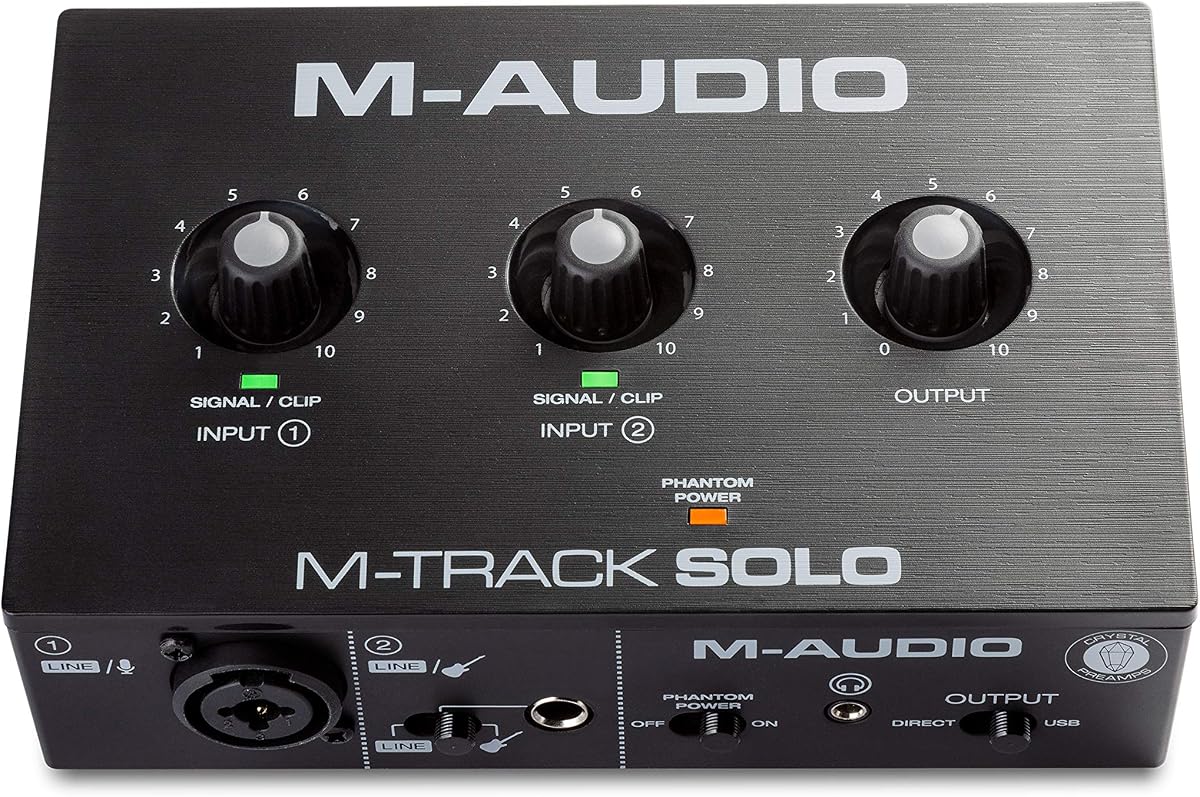
The M-AUDIO M-Track Solo is perfect for solo artists or podcasters. With a 4.3 rating it delivers quality on a budget.
We may earn a commission when you buy through this link, at no additional cost to you.
It features one XLR input and RCA outputs suitable for basic monitoring. The transparent Crystal Preamp ensures clean capture of vocals.
Includes MPC Beats software to help you produce music immediately. While it lacks multiple inputs it is cost-effective for individual use.
Great for those just starting out or needing a simple solution. It offers essential features without unnecessary complexity.
Simple setup allows you to start recording voiceovers or podcasts quickly.
MPC Beats software helps beginners produce music immediately.
We may earn a commission when you buy through this link, at no additional cost to you.
The PreSonus AudioBox 96 is a classic choice for home studios. It holds a 4.3 rating for reliable performance.
We may earn a commission when you buy through this link, at no additional cost to you.
Class-A preamps provide clean gain while MIDI I/O supports external hardware. It comes with Studio One Artist and other software for production.
USB bus power makes it portable though the build can be slightly heavy. Balanced TRS outputs ensure clean signal transmission.
Best for those needing MIDI connectivity and quality preamps. It provides a comprehensive package for beginners and intermediates.
Class-A preamps deliver low noise and high fidelity recording.
Includes MIDI I/O for connecting keyboards and drum machines.
We may earn a commission when you buy through this link, at no additional cost to you.
Choosing the right audio interface involves understanding several technical and practical factors.
Ensure the interface supports your computer's available ports such as USB or Firewire. Modern systems often lack Firewire so you may need an expansion card like the PCIE-1394A.
Check your PC's slots to confirm compatibility before purchasing.
Consider how many inputs and outputs you need for your setup. Solo artists may only need one or two while bands require higher counts like 30-in.
Selecting the right count prevents future upgrades and ensures flexibility.
Look for high resolution such as 24-bit/192kHz to ensure professional sound quality. Higher bit depths reduce noise and dynamic range issues.
Prioritize interfaces with high-quality converters for better recordings.
Mic preamps significantly impact sound quality especially for vocals and guitars. Interfaces with transparent preamps offer cleaner signal paths.
Invest in interfaces known for excellent preamps for better results.
Many interfaces include DAWs and plugins which add value to your purchase. Check what software is included to avoid extra costs.
Software bundles can help beginners start producing music immediately.
Stable drivers are crucial for uninterrupted recording sessions. Some legacy Firewire cards require legacy drivers on modern Windows systems.
Research driver availability to avoid compatibility issues.
Durable materials ensure the interface withstands regular studio use. Metal chassis and robust knobs prevent wear and tear.
A solid build protects your investment and ensures longevity.
USB bus powered interfaces are more portable but may not support all devices. Some interfaces require external power for optimal performance.
Consider your mobility needs when choosing power requirements.
Connect your interface to the PC using the correct cable type. Ensure you install any required drivers before connecting audio gear.
Use high-quality XLR or TRS cables to connect microphones and instruments. Keep cables organized to prevent interference or accidental disconnections.
Store your interface in a dry cool place when not in use. Dust and humidity can damage electronic components over time.
If your PC lacks Firewire ports you will need an expansion card like the PCIE-1394A. Most modern PCs use USB so check your ports first. The card adds legacy connectivity for older audio gear.
Firewire offers high speed and low latency but is less common now. USB is standard and more versatile with USB 3.0 offering comparable speeds. Firewire remains popular for legacy equipment compatibility.
Use the direct monitor feature on your interface to hear inputs without delay. Most interfaces like RME and M-AUDIO have dedicated switches. This allows real-time tracking without software lag.
Many interfaces support Mac and Windows systems. Check product specs for OS compatibility especially for Firewire cards. Most modern USB interfaces work seamlessly across platforms.
Phantom power is required for condenser microphones. Most interfaces include 48V phantom power but verify before purchasing. It is essential for recording studio mics effectively.
RME offers exceptional driver stability and high-quality components. Their interfaces are built for professional use with long-term reliability. The cost reflects the engineering and support they provide.
This guide highlighted ten top options for Firewire Audio Interface for PC in November 2026. From budget picks like M-AUDIO to premium RME models there is something for every need.
Prioritize connectivity and audio quality based on your specific workflow. Ensure compatibility with your system before making a purchase to avoid issues.
Prices and availability may vary so check current listings for the best deals. Your ideal interface should empower your creativity without technical frustration.