
EVISTR L357
4.2Editor score
64GB internal storage capacity
Voice activated recording feature
Long battery life support
This guide compares the top handheld recorders for journalists, evaluating audio quality, battery life, and features to help you choose the best device for
Journalists need reliable tools to capture clear audio in chaotic environments. A quality handheld recorder ensures interviews and field notes remain intelligible even when background noise is high. Portability and battery life are crucial for professionals on the move.
We evaluated ten top models based on audio fidelity, ease of use, and connectivity options. Our analysis includes devices ranging from budget-friendly options to professional-grade recorders with advanced features like 32-bit float recording and USB-C interfaces.
Each pick highlights specific strengths such as noise reduction, storage capacity, or wireless capabilities. Prices and availability change frequently, so verify current details before purchasing. This list aims to streamline your decision process for critical audio capture needs.
4.2Editor score
4.2Editor score

4.7Editor score
This side-by-side comparison highlights key specifications across all ten models to help you quickly identify which device matches your specific reporting needs and budget constraints.




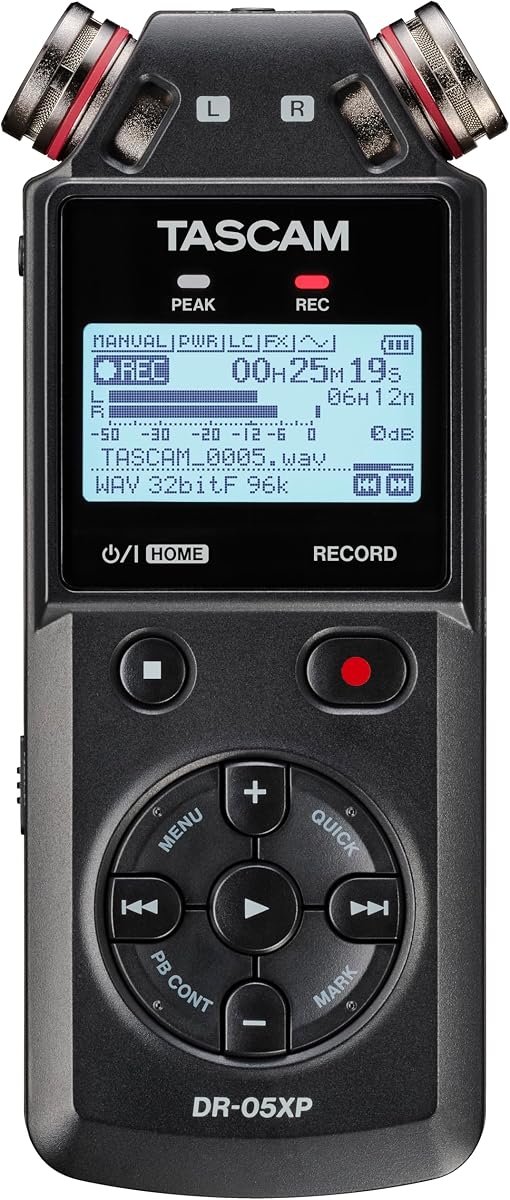
The TASCAM DR-05XP stands out as a versatile tool for journalists needing reliable field recording. It boasts a 4.2 rating and features 32-bit float technology that prevents audio clipping in unpredictable sound conditions.
We may earn a commission when you buy through this link, at no additional cost to you.
Its omnidirectional microphones capture clear sound up to 125dB SPL, making it ideal for noisy environments like press conferences. The USB-C audio interface allows direct recording to computers, streamlining your workflow significantly.
While it offers up to 17.5 hours of operation with AA batteries, note that batteries and SD cards are not included. This small trade-off ensures you have the flexibility to choose your preferred storage and power options.
Journalists who need a balance of portability and professional audio quality should prioritize this model. It handles music, voice, and video audio effectively, making it a robust choice for diverse reporting scenarios.
The 32-bit float format ensures you never lose audio details even if levels spike unexpectedly during live reporting.
Use the USB-C interface to record directly to your laptop, reducing the need for file transfers after interviews.
We may earn a commission when you buy through this link, at no additional cost to you.
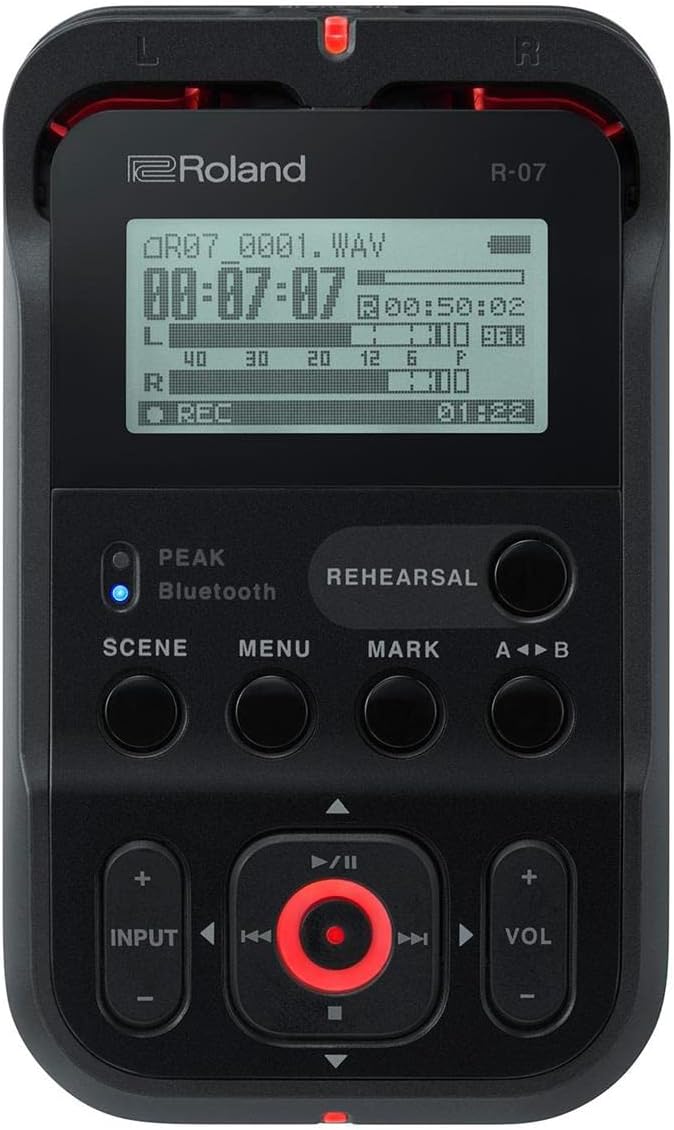
The Roland R-07 offers high-resolution recording with wireless convenience that appeals to modern journalists. With a 4.2 rating, it supports simultaneous MP3 and WAV recording to provide backup safety during critical interviews.
We may earn a commission when you buy through this link, at no additional cost to you.
Its Bluetooth control feature allows you to monitor audio using smart devices or Bluetooth speakers, enhancing flexibility in the field. The one-touch templates simplify setup, ensuring you start recording instantly without missing moments.
While the device runs on AA batteries for up to 30 hours of playback, the higher price may be a barrier for some. However, the included graphic LCD and speaker offer excellent visibility and playback convenience.
Invest in this recorder if you need advanced features and wireless capabilities for high-quality field work. It is particularly useful for podcasters and journalists who value versatility and professional sound capture.
Connect via Bluetooth to monitor your recordings in real-time without tangled cables or extra gear.
Record simultaneously in MP3 and WAV to ensure you have a lightweight backup and high-quality master file.
We may earn a commission when you buy through this link, at no additional cost to you.
The EVISTR L357 delivers exceptional value for journalists needing large storage without breaking the bank. It earns a 4.2 rating with 64GB capacity capable of storing thousands of hours of audio in high-quality PCM formats.
We may earn a commission when you buy through this link, at no additional cost to you.
Its voice-activated recording function saves battery and storage by capturing sound only when voices are detected. This is perfect for long interviews where silence between speakers is frequent and unnecessary to record.
While it lacks complex features like wireless connectivity, the metal build and long battery life ensure reliability in the field. The Type-C USB connection allows for fast file transfers to your computer after use.
Choose this recorder if you need a simple, high-capacity tool for interviews and field notes. It is a practical choice for professionals who prioritize storage and audio clarity over advanced connectivity options.
Set the sensitivity level to record only when specific voices are detected, reducing file size and noise.
With 64GB of internal memory, you can record for days without needing to delete previous files.
We may earn a commission when you buy through this link, at no additional cost to you.
The Tonfarb 64GB focuses on simplicity with instant recording capabilities that are ideal for quick field notes. It has a 4.0 rating and includes a 64GB TF card to store extensive audio files securely.
We may earn a commission when you buy through this link, at no additional cost to you.
Ergonomic controls allow you to push a side button to start recording even when powered off, ensuring you never miss a critical moment. Password protection safeguards sensitive interviews or confidential meetings from unauthorized access.
The large 1.44-inch screen offers easy navigation, but the audio quality is basic compared to premium models. It is best suited for voice memos rather than high-fidelity broadcast recordings.
Buy this device if you need a reliable tool for personal memos and quick notes in the field. Its security features and large storage make it a strong contender for privacy-conscious journalists.
Use password protection to keep your confidential audio files secure from prying eyes.
Start recording instantly without powering on the device, ensuring you capture unexpected moments easily.
We may earn a commission when you buy through this link, at no additional cost to you.
The Zoom H5 is a professional-grade tool designed for filmmakers and journalists needing high-fidelity audio capture. With a 4.7 rating, it features interchangeable capsules that adapt to different recording scenarios easily.
We may earn a commission when you buy through this link, at no additional cost to you.
Its XLR/TRS combo connectors allow direct connection to external microphones or mixers, providing flexibility for complex setups. The safety net recording feature protects against distortion by maintaining a lower backup track automatically.
While it runs on 2 AA batteries, the high-quality audio and multichannel support justify the premium price for serious professionals. You will need to purchase an SD card separately, which adds to the initial cost.
Invest in the Zoom H5 if you need a versatile and robust recorder for critical broadcasts. Its ability to handle external gear and simultaneous multi-track recording makes it a top choice for high-stakes journalism.
Swap input capsules easily to match the acoustic environment, similar to changing camera lenses.
Record a backup track at a lower level to ensure you never lose audio even if clipping occurs.
We may earn a commission when you buy through this link, at no additional cost to you.
The Tascam DR-40 is a reliable portable digital recorder that supports four-track recording for layered audio capture. It has a 4.6 rating and offers a solid build quality suitable for daily field use by journalists.
We may earn a commission when you buy through this link, at no additional cost to you.
Its built-in stereo microphones capture natural sound without needing extra gear, making it simple to use for interviews. The compact design ensures it fits easily in a pocket or bag, adding minimal weight.
While it is an older model compared to newer USB-C options, its simplicity and reliability are strong assets. It is a good choice for those who prefer a straightforward interface without complex menus.
Consider this recorder if you need a dedicated device for capturing layered sound or field notes. Its portability and proven track record make it a practical tool for consistent audio work.
Record up to four tracks simultaneously for complex field recordings requiring multiple sources.
Use the integrated stereo mics for quick setup without carrying additional accessories.
We may earn a commission when you buy through this link, at no additional cost to you.
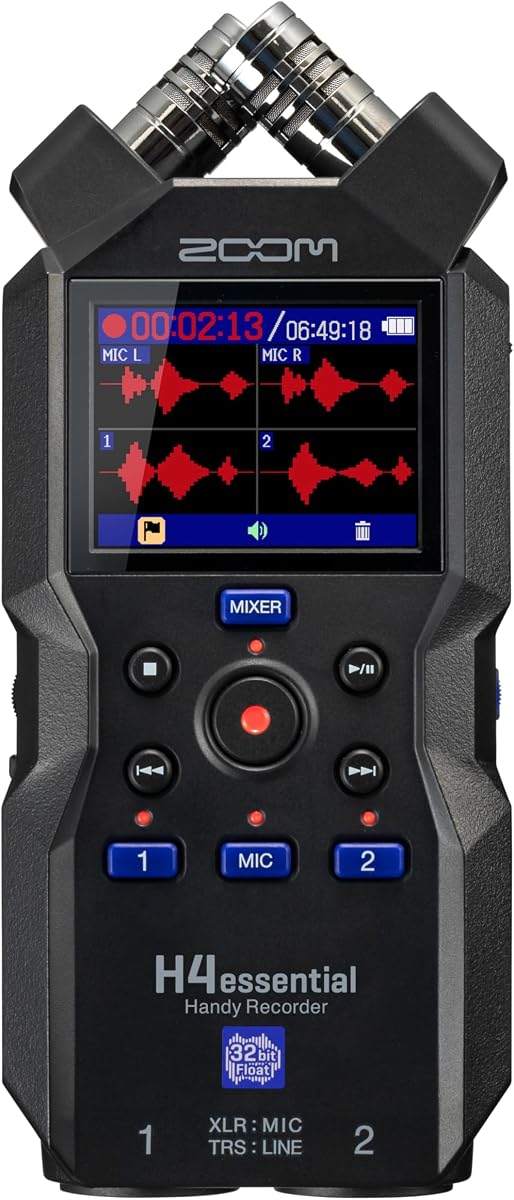
The Zoom H4 Essential combines professional audio capture with accessibility features that benefit all users. It receives a 4.4 rating and includes spoken menu guidance to help visually impaired journalists navigate settings easily.
We may earn a commission when you buy through this link, at no additional cost to you.
You can use the built-in stereo microphones or connect external gear via two XLR/TRS inputs for greater flexibility. USB-C connectivity allows you to stream directly to devices or save backups to SD cards.
While you must purchase a separate SD card, the ability to connect to mixers and stream audio makes it versatile. The 4-track capability ensures you can capture detailed audio without worrying about distortion.
Choose this recorder if you need an accessible and reliable tool for various content types. Its design supports a wide range of creators, making it a robust option for inclusive journalism.
Spoken menu navigation helps users with visual impairments operate the device independently and efficiently.
Connect external microphones or mixers easily to expand your recording capabilities beyond built-in mics.
We may earn a commission when you buy through this link, at no additional cost to you.
The Pocket AI Voice recorder transforms audio into actionable insights using advanced AI transcription technology. With a 4.6 rating, it allows you to tap once and start recording, then instantly get summaries of your meetings.
We may earn a commission when you buy through this link, at no additional cost to you.
Its MagSafe compatibility lets you attach it to your iPhone for hands-free recording, freeing up your hands for notes. The long-lasting 4-day battery ensures it lasts through extended travel or reporting trips without frequent charging.
While core features are included out of the box, some advanced tools require an optional subscription. This may add to the overall cost but provides significant value for professionals needing quick transcription.
Invest in this device if you need AI assistance to manage interview notes and transcripts efficiently. It is ideal for journalists who want to reduce post-recording workload significantly.
Turn raw audio into structured summaries and key points instantly without manual transcription.
Attach easily to your phone using MagSafe to record discreetly without holding a device.
We may earn a commission when you buy through this link, at no additional cost to you.
The Zoom H1 Essential is designed for content creators needing polished sound for videos and interviews. It earns a 4.0 rating and features natural stereo sound that helps voices come through clearly in any setting.
We may earn a commission when you buy through this link, at no additional cost to you.
Its USB-C connection allows it to function as a high-quality microphone for livestreams or remote meetings. This dual utility makes it a valuable tool for journalists who also produce digital content regularly.
While it lacks the advanced features of premium models, its simplicity and portability are ideal for on-the-go reporting. You can record ambience and voiceovers with consistent quality using its built-in mics.
Choose this recorder if you need an entry-level device that balances quality with ease of use. It is a great starting point for journalists creating multimedia content on a budget.
Use the device as a standalone recorder or connect it as a USB mic for computer sessions.
Capture clear stereo audio without distortion, perfect for interviews and ambient recording.
We may earn a commission when you buy through this link, at no additional cost to you.
The Zoom H2 Essential offers versatile recording patterns to adapt to different audio environments easily. It has a 4.4 rating and features three microphones allowing nine patterns for capturing everything from interviews to wide soundscapes.
We may earn a commission when you buy through this link, at no additional cost to you.
Its audio accessibility features include audible menu navigation in seven languages, helping blind or visually impaired users. You can also sync multiple units wirelessly via Bluetooth timecode for aligned multi-unit recordings.
While you need to buy an SD card separately, the ability to record simultaneously to SD and USB ensures reliable backups. The 32-bit float recording prevents clipping regardless of volume levels.
Select this recorder if you need adaptable patterns and accessibility features for inclusive field reporting. It is a robust choice for journalists who value flexibility and user-friendly design.
Choose from nine patterns to match the sound source direction, from focused interviews to ambient scenes.
Wirelessly sync multiple recorders via Bluetooth timecode to align recordings from different locations.
We may earn a commission when you buy through this link, at no additional cost to you.
Selecting the right recorder requires balancing audio quality with practical features. Here are key factors to consider before you buy.
High-resolution formats like 24-bit or 32-bit float ensure clear audio even in noisy environments. Look for devices that support WAV recording to preserve maximum quality for later editing.
Prioritize recorders that offer lossless formats to maintain professional standards in your field reports.
Long battery life is crucial for all-day reporting without interruption. Aim for models that last at least 15 hours on a single charge or with standard AA batteries.
Check if the device uses standard batteries to ensure you can easily replace them in the field.
Ample storage allows you to record hours of interviews without worrying about running out of space. Devices with 64GB or more internal memory are ideal for journalists covering multiple events.
If the device uses SD cards, verify it supports high-capacity cards to extend your recording time.
Omnidirectional mics capture sound from all directions, making them useful for group discussions. Directional mics focus on specific voices, which is better for one-on-one interviews.
Choose a recorder with interchangeable microphones if you need flexibility for different reporting scenarios.
USB-C interfaces allow direct file transfers to computers, streamlining your workflow. Bluetooth control adds convenience by letting you manage recordings with your smartphone.
Ensure the device supports standard connection types compatible with your existing editing equipment.
Intuitive controls prevent missed moments during fast-paced interviews. One-touch recording or voice activation features help you start capturing sound instantly.
Look for clear displays and logical menus that allow quick setup without distracting you from the interview.
Rugged build quality ensures the device survives travel and outdoor conditions. Metal housings are more resistant to wear and tear compared to plastic alternatives.
Check for features like password protection to keep sensitive interviews secure and organized.
Balance your budget with the features you truly need. Basic models offer essential recording while premium units provide advanced options like AI transcription or wireless sync.
Invest in a device that offers the best value for your specific reporting requirements without unnecessary extras.
Before your first use, insert the SD card and charge the battery fully. Familiarize yourself with the button layout and menu system to ensure quick operation during interviews.
Test the recording levels in the actual environment before starting an interview. Adjust sensitivity settings or microphone placement to avoid distortion or quiet audio tracks.
Regularly back up your files to a computer or cloud storage to prevent data loss. Clean the microphone grilles gently with a soft brush to maintain audio quality over time.
32-bit float recording allows for a wider dynamic range and prevents audio clipping even if levels spike. It ensures you never lose sound details in unpredictable environments.
Most recorders require an SD card for storage. Check the manual to ensure you have a compatible card with enough capacity for your needs.
Battery life varies by model and usage. Most devices last between 15 to 30 hours on a single charge or with standard AA batteries.
Yes, many modern recorders support USB-C connectivity allowing them to function as microphones for computers or streaming devices.
WAV format is recommended for high-quality audio preservation. MP3 is suitable for smaller file sizes when high fidelity is not required.
Yes, some models like the Pocket AI Voice include built-in AI transcription to convert recordings to text automatically.
We have reviewed ten top recorders suitable for journalists, highlighting their unique strengths in audio quality and usability.
Prioritize devices that offer 32-bit float recording or high-quality mics to ensure clear sound regardless of environment.
Always check current prices and availability before purchasing to get the best deal for your specific reporting needs.