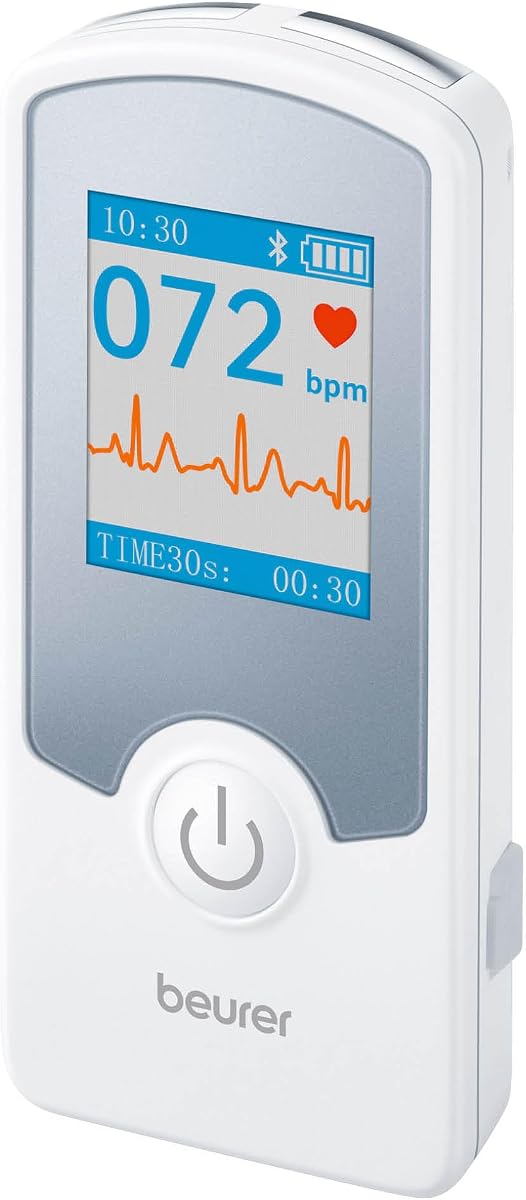
Beurer Cardio Companion EKG
4.2Editor score
Affordable 3-lead monitor
Fast 30 second results
Rechargeable battery included
This guide compares the best heart rate monitor for arrhythmia to help you find a device that accurately tracks rhythm irregularities and shares data with your
Finding a reliable heart rate monitor for arrhythmia is crucial for individuals managing irregular heartbeats or seeking peace of mind. These devices offer more than just standard pulse tracking; they provide detailed electrocardiogram readings that can detect conditions like atrial fibrillation. Choosing the right tool ensures you have accurate data to share with healthcare professionals during your checkups.
We evaluated ten top-rated devices based on accuracy, ease of use, subscription requirements, and compatibility with smartphones. Our analysis focused on models that offer FDA-cleared determinations and medical-grade six lead or three lead capabilities. Each product was assessed for its ability to provide quick results and reliable data storage options for long term health tracking.
Every pick in this list highlights specific strengths such as portable design, continuous monitoring, or doctor review services. Prices and availability can change frequently so please verify current listings before making a purchase. We aim to provide clear comparisons to help you select the device that best fits your specific cardiac monitoring needs and lifestyle requirements.
4.2Editor score

4.4Editor score

3.6Editor score
This side-by-side comparison highlights key specifications and features across all ten selected heart rate monitors. Each entry includes the product name, image, direct link, and a concise list of technical specifications to help you quickly identify the device that matches your monitoring needs and budget constraints.



The KardiaMobile 6L EKG stands out as a top choice for individuals needing detailed heart rhythm monitoring. With a rating of 4.4 stars, it is trusted by professionals and offers medical-grade six-lead recordings. This device provides FDA-cleared determinations of your heart rhythm in just 30 seconds, making it an efficient tool for home health checks.
We may earn a commission when you buy through this link, at no additional cost to you.
Its six-lead capability offers six times the data compared to single lead monitors, giving you a more detailed view of your heart health. You can detect conditions like AFib, Bradycardia, and Tachycardia directly on your smartphone without needing a subscription. The ability to share this rich data with your doctor enhances communication and supports proactive cardiac care.
While the device is highly capable, it is important to note it is not tested for use with pacemakers or ICDs. Additionally, it does not check for heart attacks and should not replace regular health checkups. These limitations are acceptable for users seeking specific rhythm insights rather than emergency diagnostics or those with implanted devices.
This monitor is ideal for tech-savvy users who want to track their heart health independently and share results with professionals. Whether you are monitoring known conditions or seeking peace of mind, the KardiaMobile 6L delivers reliable, detailed EKG results. We recommend it for anyone prioritizing accuracy and data depth in a portable package.
The six-lead system captures more comprehensive data allowing for better detection of complex arrhythmias than simpler devices.
Without a required subscription, users can record unlimited EKGs over time without worrying about recurring monthly costs.
We may earn a commission when you buy through this link, at no additional cost to you.
The KARDIAMOBILE KardiaMobile is designed for simplicity and speed. With a strong rating of 4.4 stars, this device allows users to monitor their heart rhythm by simply placing fingers on the silver sensors. It delivers results in 30 seconds and requires no Bluetooth Wi-Fi or cords to function.
We may earn a commission when you buy through this link, at no additional cost to you.
Its primary strength lies in its ease of use. You do not need to set up complex connections or worry about pairing issues. Just place the device near your smartphone and touch the sensors to get a quick check of your heart rhythm. This makes it perfect for users who want a hassle-free experience.
However, this model offers less data compared to the 6-lead version. It is a single lead device which limits the depth of information available for complex rhythm analysis. Users needing more detailed views might find this insufficient. It also relies on smartphone proximity for full functionality in some use cases.
This model is best for those seeking a basic, reliable tool to check heart rhythm periodically without technical overhead. It is great for seniors or anyone who prefers a straightforward device. If you need quick peace of mind without subscriptions or complicated setup this is a solid choice.
No complex pairing required makes this device accessible to users of all technical skill levels immediately.
The small form factor allows you to carry it in a pocket or purse for monitoring anywhere.
We may earn a commission when you buy through this link, at no additional cost to you.
The KardiaMobile 6L Max combines high-quality hardware with a comprehensive service plan. It features the same medical-grade six-lead EKG recording as the standard model but includes a one-year KardiaCare membership. This allows users to access board-certified cardiologist reviews and detailed insights for managing their heart health proactively.
We may earn a commission when you buy through this link, at no additional cost to you.
Key benefits include the ability to email EKGs automatically to anyone you choose and personalized reports that identify trends. The membership provides four free reviews per year which can be valuable for those wanting professional feedback. This level of support elevates the device beyond simple data collection.
On the downside the membership renews after the first year unless canceled which may add to long-term costs. Users must enter payment details upon setup. While the first year is free the ongoing commitment might not suit everyone. Additionally some users prefer the simplicity of no subscription models.
This device is ideal for users who want expert analysis alongside their heart tracking. It suits those managing chronic conditions who value professional interpretation of their data. If you want peace of mind through direct cardiologist access and detailed trend reports this is a powerful option.
Free reviews per year provide expert validation of your heart rhythm data for informed health decisions.
Tagging EKGs with context helps identify patterns like exercise effects on your heart rhythm over time.
We may earn a commission when you buy through this link, at no additional cost to you.
The EMAY 6L Portable ECG Monitor offers robust features at a competitive price point. With a high rating of 4.6 stars, it records ECG signals and displays heart rate in six channels. The device connects to mobile phones via Bluetooth and to PCs via USB, providing flexibility in data management and analysis.
We may earn a commission when you buy through this link, at no additional cost to you.
A significant advantage is the lack of subscription fees. You can record, store, and review ECG signals without hidden costs. The software supports sample mode time settings, and case review which adds depth for users comfortable with digital tools. The built-in large capability rechargeable lithium battery ensures long usability between charges.
The device is intended for OTC use and does not substitute for hospital diagnostic equipment. It is not recommended for implanted pacemaker users. While powerful, the PC software might require some technical familiarity to fully utilize all features like case upload and review compared to simpler smartphone-only apps.
This monitor is great for tech-savvy users who want detailed six-channel data without recurring fees. It is suitable for home health care where data can be reviewed locally or shared electronically. If you want flexibility between PC and phone usage without subscriptions this is a strong contender.
Connect via Bluetooth for mobile convenience or USB for detailed analysis on a computer.
Avoid monthly memberships by storing unlimited recordings locally or on your computer for free.
We may earn a commission when you buy through this link, at no additional cost to you.
The Beurer Cardio Companion EKG Monitor is a German-engineered device that balances affordability with precision. It is FDA-cleared and provides heart rhythm measurements in under 30 seconds with real-time results on its bright color display. This compact portable device allows you to monitor heart health from the privacy of your home.
We may earn a commission when you buy through this link, at no additional cost to you.
Key strengths include four measurement ways (hand-to-hand, hand-to-wrist, leg, or chest) and real-time monitoring that alerts you to irregular heart rates. You can save up to 100 readings locally or use the optional Bluetooth app for unlimited storage. The rechargeable USB-B battery ensures convenience without constant battery replacement.
The app is optional meaning the device works independently which some may prefer. However the storage limit of 100 local readings may require manual clearing if you track frequently. It is also not suitable for those with pacemakers or metal implants that emit electrical pulses which is a standard restriction for these devices.
This device is best for budget-conscious users seeking reliable irregular rhythm detection. It is ideal for occasional checks without needing a connected app. If you want a simple portable monitor with real-time alerts and no monthly fees this is a highly recommended choice.
Choose from four placement options to find the most comfortable and stable measurement setup for you.
Keep up to 100 readings on the device itself without needing a smartphone connection immediately.
We may earn a commission when you buy through this link, at no additional cost to you.
The Bioheart 24/7 Continuous Heart Monitor offers a unique approach with uninterrupted medical-grade insights. Unlike spot-check devices, this smart wearable captures every heartbeat anytime and anywhere. Trusted by over 2500 cardiologists, it provides precise rhythm analysis directly from your home with no prescription needed.
We may earn a commission when you buy through this link, at no additional cost to you.
Designed for daily life, the breathable washable fabric strap allows for continuous wear during sleep and exercise. The app syncs via Bluetooth to show live heart activity and share comprehensive PDF reports with your physician. It includes one month of subscription and recognizes by TIME Magazine as a top invention.
The main trade-off is that a subscription is required after the first month to maintain access to insights. The battery life lasts up to 48 hours which means regular recharging is necessary. While comfortable the strap sizes must be selected carefully to ensure a secure fit for all users.
This monitor is best for users who need detailed long-term data to understand arrhythmias patterns. It suits active individuals who want insights during workouts and sleep. If continuous tracking and easy sharing with doctors are your top priorities this device stands out.
Capture every heartbeat throughout the day and night to provide a complete picture of your heart health.
Share comprehensive PDF reports with your doctor effortlessly to facilitate informed medical discussions.
We may earn a commission when you buy through this link, at no additional cost to you.
The HaSoCare EKG monitoring device is designed to record professional ECG data for real-time health monitoring. It is compact and lightweight at only 60g making it easy to carry anywhere. The device delivers medical-grade ECG data and professional analysis in just 30 seconds helping you detect heart problems in time.
We may earn a commission when you buy through this link, at no additional cost to you.
It features multiple monitoring modes including hand to hand, hand to chest, and hand to leg to give a full picture of your situation. Data can be transferred to cell phones via Bluetooth or computers via cable for sharing with family or doctors. There is no subscription required and you can set sampling modes from your device.
Stability during measurement is important for accuracy especially with the hand to chest modes. As a portable device it relies on battery power which may need periodic replacement or charging. While it provides instant results it serves best as a monitoring tool rather than a full diagnostic replacement for hospital equipment.
This device is ideal for users who want a lightweight portable tool for quick checks on the go. It suits those who prefer physical storage and data transfer options without subscriptions. If you need a simple reliable way to get professional ECG data anywhere this is a great option.
Carry professional grade ECG capabilities in a pocket-sized device weighing only 60 grams for true mobility.
Connect to computers or phones easily to share your health data with loved ones or providers.
We may earn a commission when you buy through this link, at no additional cost to you.
The Garmin HRM 200 is a durable heart rate monitor designed to transmit accurate real-time data to compatible Garmin smartwatches and fitness equipment. It features a comfortable strap available in two sizes for a secure fit. The battery lasts up to 1 year and is user-replaceable offering convenience for long-term use.
We may earn a commission when you buy through this link, at no additional cost to you.
With a 3 ATM water rating and machine washable strap it is built to withstand sweat and rain during training. This makes it ideal for intense workouts and daily exercise. While it tracks heart rate variability data its primary purpose is fitness performance rather than detailed arrhythmia diagnostics.
The device requires pairing with compatible Garmin smartwatches which may limit compatibility with other platforms. It does not provide medical-grade EKG analysis but focuses on accurate heart rate transmission. Users needing specific irregular rhythm detection should look for EKG-capable devices instead of fitness straps.
This monitor is best for athletes who want reliable heart rate data during training without frequent charging. It suits those already in the Garmin ecosystem who want washable durable gear. If fitness tracking is your main goal alongside general heart monitoring this is a solid choice.
Enjoy up to one year of battery life with a simple user-replaceable battery to avoid charging interruptions.
With 3 ATM water rating and washable design it handles tough training conditions and sweat effortlessly.
We may earn a commission when you buy through this link, at no additional cost to you.
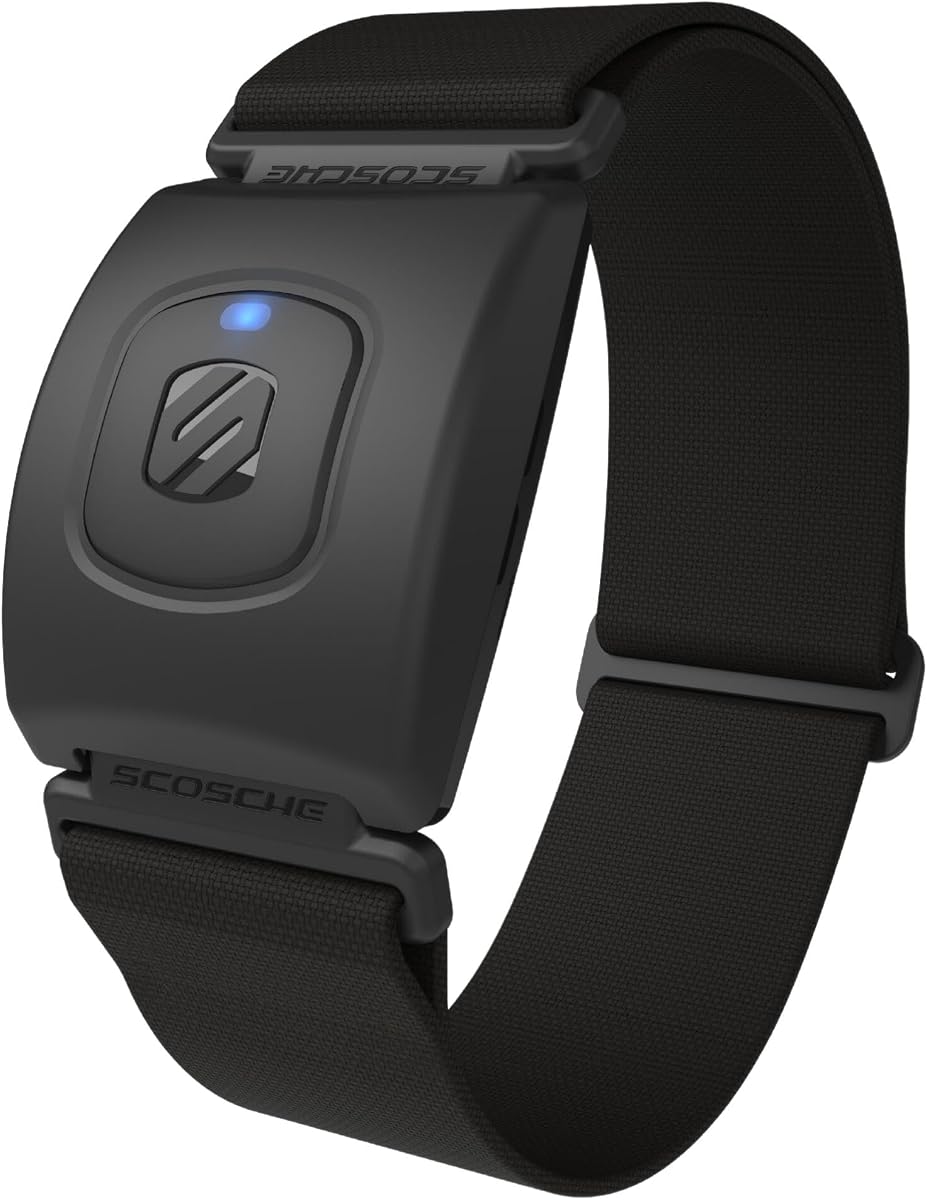
The Scosche Rhythm Heart Rate Armband delivers accurate real-time tracking for running gym workouts and cycling. It pairs via Bluetooth or ANT+ to sports watches or fitness apps. The HRV mode captures precise RR interval data offering deeper insights into training sleep quality and daily stress levels.
We may earn a commission when you buy through this link, at no additional cost to you.
The lightweight breathable strap adjusts securely to the forearm bicep or tricep. It stays put during intense workouts as a dependable alternative to restrictive chest straps. With up to 24 hours of continuous battery life and IP68 waterproof rating it is built to withstand demanding training conditions indoors or outdoors.
Optical sensors may face slightly less precision compared to chest straps in certain high-intensity scenarios. While great for tracking recovery and workout intensity it does not provide medical-grade EKG analysis. This makes it less suitable for specific arrhythmia diagnosis compared to dedicated EKG devices.
This armband is ideal for fitness enthusiasts who want comfortable reliable tracking without a chest strap. It suits users who want to monitor heart rate variability and recovery metrics. If you need a durable sweat-resistant device for workouts this is a highly reliable option.
Connect with either Bluetooth or ANT+ to work with a wide range of smartwatches and fitness apps.
Use HRV mode to understand your body's recovery needs and daily stress levels from heartbeat variations.
We may earn a commission when you buy through this link, at no additional cost to you.
The Polar FT1 Heart Rate Monitor provides a clear and easy-to-read display for tracking heart rate during exercise. It helps improve fitness with manual heart rate target zones and displays workout summaries. The simple one-button start and coded heart rate transmission avoid cross-talk ensuring you see your own data accurately.
We may earn a commission when you buy through this link, at no additional cost to you.
It includes a wristband size of 8.5 inches and comes with a Polar T31 coded transmitter chest strap. This system is designed to help you safely exercise within your target zone. While the interface is straightforward it lacks modern app connectivity found in newer models focusing on simple display-based tracking.
The need for a separate chest strap means it is less convenient than all-in-one solutions. The display is functional but basic which might not appeal to users wanting detailed app analytics. However for those who prefer physical displays and straightforward metrics it remains a reliable tool.
This monitor is best for users who want a no-fuss display for heart rate zones during workouts. It suits those who prefer not to manage apps or phone connectivity. If a clear physical readout and simple operation are your main goals this is a solid option.
See your heart rate clearly on a large display to stay safely within your target training zone.
Coded transmission ensures your data is not mixed with others heart rate monitors during group sessions.
We may earn a commission when you buy through this link, at no additional cost to you.
Selecting the right heart rate monitor for arrhythmia involves evaluating several technical and practical factors. This guide breaks down the most important elements to consider before purchasing to ensure you find a device that meets your specific cardiac monitoring needs.
The number of leads in an EKG device determines the depth of data you can collect. Single-lead monitors offer basic rhythm checks while six-lead devices provide detailed views comparable to hospital tools. Choose based on how much medical detail you need to share with your doctor.
More leads mean better detection of complex arrhythmias but may require more precise placement. Assess whether you need simple alerts or comprehensive analysis before choosing.
Many advanced devices require subscriptions to unlock features like cloud storage or professional reviews. Some models offer unlimited recordings without monthly fees which can save money over time. Check if you want long-term access without recurring charges.
Always verify the first year terms and renewal rates. Devices with no required subscriptions offer more financial flexibility for casual users.
Most modern monitors rely on smartphone apps for data display and storage. Ensure the device supports your phone's operating system and has a user-friendly interface. Bluetooth connectivity should be stable to prevent data loss during readings.
If you prefer standalone devices look for monitors with built-in screens and local storage options. This reduces dependency on a phone for every check.
FDA-cleared devices provide higher assurance of accuracy for rhythm determinations. Medical-grade readings help ensure that the data you share with doctors is reliable and clinically useful. Look for clear statements about clearance in product descriptions.
Accuracy is vital for detecting irregular beats. Prioritize devices that mention clinical validation or professional endorsements.
Portable monitors should be lightweight and easy to carry. A compact design allows you to track heart health at home, work, or while traveling. Consider weight and form factor if you plan to use it frequently.
Comfort is also key for wearable options. Breathable straps and adjustable sizes improve long-term usability.
Long battery life means fewer interruptions in your tracking routine. Rechargeable batteries are convenient but check the duration between charges. User-replaceable batteries offer simplicity if charging is inconvenient.
For continuous monitors battery efficiency is critical to avoid data gaps during sleep or exercise.
The ability to share EKGs with doctors via email or cloud services is essential for proactive care. Look for devices that export standard formats or integrate with health apps. Direct sharing simplifies the consultation process.
Ensure the software allows easy transfer to PDF or health records. This aids in accurate diagnosis and record keeping.
Some devices are not recommended for users with pacemakers or specific metal implants. Always read safety warnings to confirm compatibility with your medical devices. Ignoring these guidelines could lead to inaccurate readings or discomfort.
If you have an implanted device consult your physician before purchasing a monitor. Safety must come first in all health tracking decisions.
To get accurate readings clean your skin and the device sensors before each use. Dry hands and contact points prevent signal interference that might distort your EKG results. Follow the manufacturer's specific instructions for finger placement or strap positioning.
Store your device in a dry cool place when not in use to preserve battery life and electronics. Avoid exposing it to extreme temperatures or moisture unless it is waterproof. Regular cleaning with a soft cloth maintains hygiene and sensor performance.
Review your data regularly and update any connected apps to ensure smooth syncing. If you notice irregular readings recheck your contact points and try again. Keeping your device updated and maintained ensures consistent long-term accuracy.
While these devices can detect irregular patterns they cannot definitively diagnose conditions without professional review. They provide valuable data and preliminary insights but should not replace medical evaluation. Consult a doctor for confirmation and treatment plans based on your results.
Many EKG monitors are not recommended for users with pacemakers or ICDs due to potential interference or accuracy issues. Always check the product safety warnings and consult your healthcare provider before use. Your safety and device compatibility are critical factors to consider.
It depends on the model. Some offer unlimited recordings and analysis without fees while others require subscriptions for cloud storage or expert reviews. Read the product details to confirm if a membership is mandatory for basic functionality or advanced features.
Most modern monitors deliver results in about 30 seconds after proper placement. This quick turnaround allows you to check heart rhythm on demand during symptoms or daily wellness checks. Faster results help you respond promptly to any detected irregularities.
Many models include features to email EKGs or export data as PDFs for easy sharing with healthcare providers. This allows doctors to review trends and irregularities between appointments. Look for devices that support direct sharing to simplify communication.
Some models like fitness straps are waterproof while others are not. Check the water rating before using them during intense sweating or water activities. Proper rating ensures the device remains functional and safe during physical exertion.
If you detect irregular patterns repeat the reading to confirm accuracy. If results remain abnormal or you feel symptoms like dizziness seek medical advice immediately. Do not rely solely on the device for emergency situations.
Frequency depends on your health needs. Some users check daily while others use it when symptoms occur. Regular monitoring helps establish a baseline and track changes over time for better health management.
We highlighted ten top choices ranging from simple spot-check devices to continuous monitoring solutions. Each option offers unique benefits depending on whether you prioritize cost accuracy or detailed professional insights. Selecting the right tool depends on your specific cardiac goals.
Focus on features that match your lifestyle such as ease of use and data sharing capabilities. Consider whether you need ongoing subscription services or prefer one-time purchases. The best monitor is one you will use consistently and trust.
Prices and availability fluctuate so always check current listings before buying. We recommend visiting the product pages to confirm the latest specs and offers. Stay proactive about your heart health with a reliable and accurate monitoring tool.